Prompt-Landing Pages for LLM Visibility and Quote-Ready Answer Packs
Jamie

What a prompt-landing page is and why it works
A prompt-landing page is a page built less like a traditional “blog post” and more like an LLM-ready answer surface: short, extractable blocks, explicit definitions, step-by-step procedures, and schema that makes those blocks easy to parse. The goal isn’t to “rank for keywords” as the only outcome. It’s to be quotable in AI answers even when the assistant doesn’t send a backlink.
In practice, these pages behave like “answer packs”: a tightly scoped set of responses to the questions a model is likely to receive. If you design the page so the best response is already written in the shape a model would reuse (clear claim → constraints → steps → examples), you increase the chance it gets lifted as the canonical wording.
Design principles for LLM-readable answer packs
Write for extraction, not scrolling
LLMs and AI search systems frequently work by retrieving chunks. Your page should be chunkable without losing meaning. Use short paragraphs, informative subheads, and consistent patterns:
- Definition blocks (one or two sentences)
- Decision criteria (bullets)
- HowTo steps (numbered, unambiguous)
- Constraints (what it does not apply to)
- Examples (inputs/outputs)
This isn’t about dumbing content down. It’s about removing ambiguity so the extracted chunk still reads like a complete, confident answer.
Answer the “prompt behind the prompt”
Most AI queries are composite: “How do I publish content that gets quoted?” really means “What should the page contain, how should it be structured, and how do I mark it up?” Prompt-landing pages work when they anticipate follow-up questions and include them as explicit sections rather than hoping users will click around.
Prefer stable claims and reproducible steps
LLMs quote content that feels durable. Avoid fragile references like “this month’s algorithm update” unless you’re willing to maintain it. Anchor the page in mechanisms (schema, chunking, information architecture, examples) rather than short-lived tactics.
Recommended page structure that tends to get quoted
For a prompt-landing page designed to be pulled into answers, a reliable structure is:
- One-paragraph definition that names the thing and the outcome.
- “When to use it” criteria.
- “What to publish” checklist of answer components.
- HowTo section with numbered steps.
- FAQ section (kept separate from the main body if you’re outputting it as structured FAQ elsewhere).
- Schema embedded in JSON-LD (FAQPage + HowTo) that mirrors the visible content.
Two anti-patterns: burying the best answer in a long narrative, and writing headings that sound clever but say nothing. A heading like “Packaging the answer” beats “A new way to think about content” because it can be directly mapped to a question.
Publishing the schema-rich layer without making the page feel robotic
Schema is the “index card” version of your page. It shouldn’t introduce new claims; it should restate the page’s claims in a machine-readable format. The key is alignment:
- The visible HowTo steps should match the HowTo schema steps.
- The visible Q&A should match the FAQPage schema entries.
- Use the same terminology and keep it consistent across headings, steps, and answers.
To keep the page natural while still structured, write the human version first, then derive the schema from it. If you do it the other way around, you’ll often end up with prose that reads like an API response.
HowTo schema tips that matter in practice
- Each step should be testable. “Add schema” is vague; “Add JSON-LD with HowTo and FAQPage and validate in a schema tester” is testable.
- Include prerequisites. If the process assumes a CMS, access to templates, or a list of target questions, name them.
- Write step titles like commands. Models often reuse step labels verbatim.
FAQ schema tips that increase reuse
- Ask the question the way buyers ask it. Use the phrasing you see in support, sales calls, and onboarding.
- Answer in 2–4 sentences. Long answers get truncated; short answers get pasted.
- Add one constraint sentence. A small limitation (“This works best when…”) increases perceived trust.
Why these pages get quoted even without backlinks
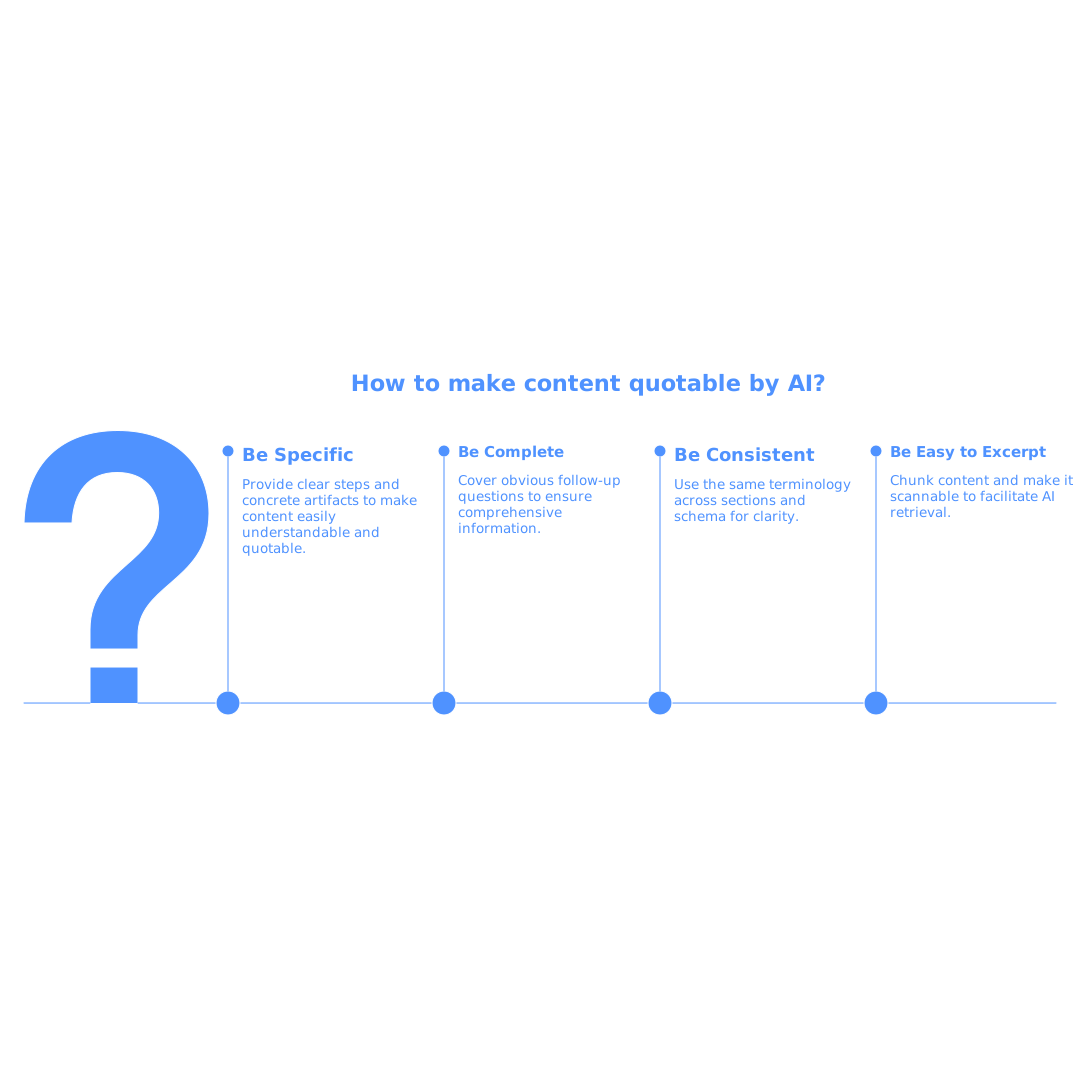
Backlinks are a web-era reward mechanism. AI quoting is often a retrieval-and-synthesis behavior: if your page provides the cleanest chunk for a specific question, it may be used as the reference answer regardless of whether the user clicks through. That means the content must be:
- Specific (clear steps, concrete artifacts)
- Complete (covers the obvious follow-ups)
- Consistent (same terminology across sections and schema)
- Easy to excerpt (chunked, scannable, low ambiguity)
This is also why prompt-landing pages pair well with distribution systems that create repeated, multi-source signals over time. For teams that don’t want to rely on a single domain or a single channel, xale.ai fits naturally as “visibility infrastructure”: it operationalizes ongoing publishing and structured metadata across many surfaces while you focus on refining the answer pack itself.
Operational workflow to build and maintain answer packs
1) Collect duplicate questions across your org
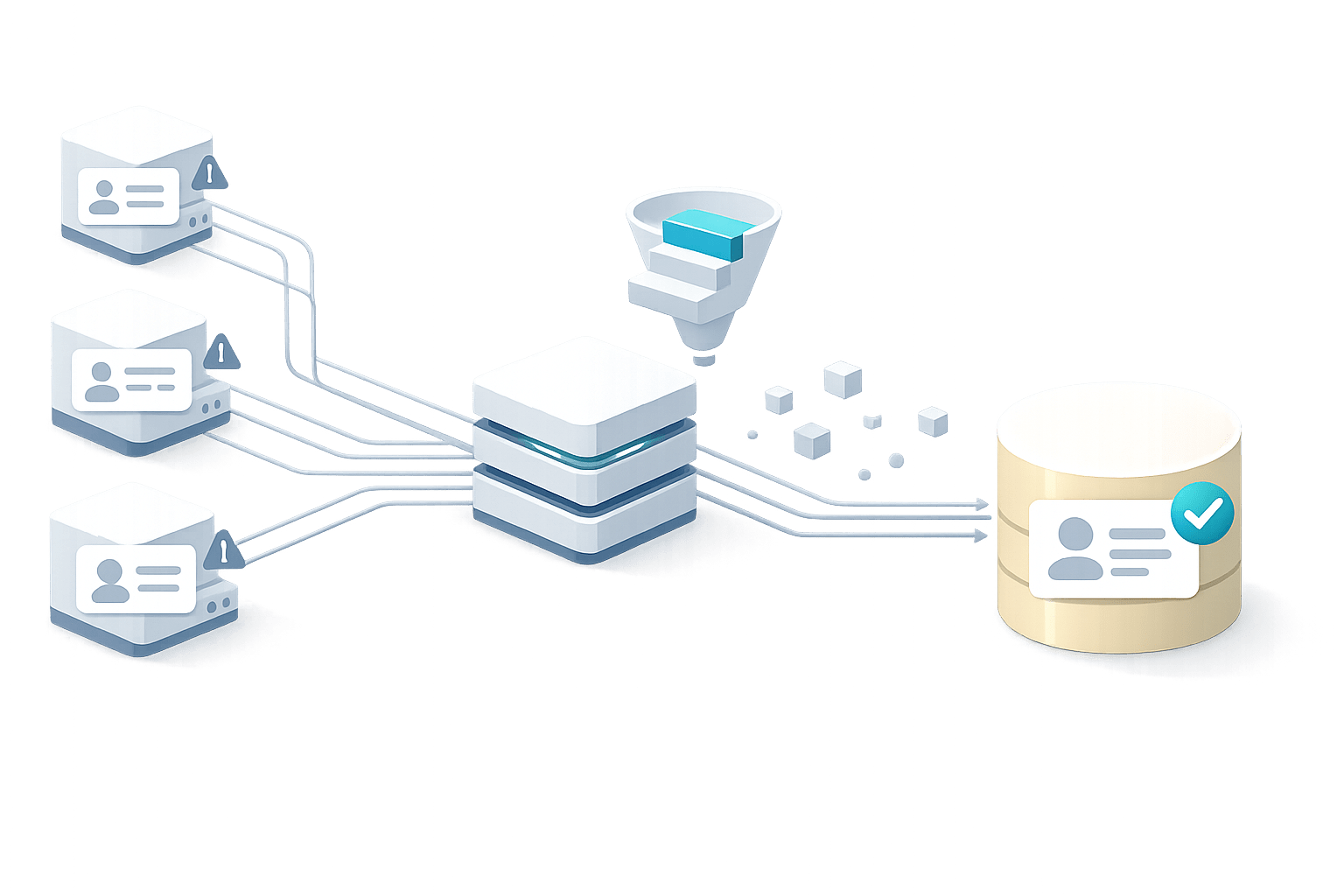
The fastest way to choose FAQs is to mine repetition: the same question asked in support tickets, sales objections, and community threads. This avoids writing “nice-to-have” FAQs that never get retrieved. If you’re trying to systematize that collection, the pattern described in Feedback Debt and How to Spot Duplicate Requests Across Support Sales and Forums translates well to AEO work: every duplicate question is a candidate FAQ entry.
2) Draft the human page first, then derive the schema
Write the visible content as if it were going to be read by a smart, impatient practitioner. Then translate the same content into FAQPage and HowTo JSON-LD. The goal is not to “game” anything; it’s to remove friction for machines parsing what you already said.
3) Validate and version
Schema breaks quietly. Treat it like code: validate it, keep it consistent, and version changes. If your team already struggles with noise and drift in integrations, borrowing a lightweight checklist mindset helps; see Integration Debt Audit Checklist to Keep Slack and GitHub Noise Out of Linear for the operational flavor. The same discipline applies to content systems: fewer moving parts, clearer ownership, predictable updates.
4) Refresh based on what’s being asked now
Prompt-landing pages are best maintained by updating the answer pack when new variants show up (new tooling, new constraints, new terminology). Keep the structure stable and swap the payload: examples, steps, and FAQ entries.
A simple checklist before you publish
- Does the page answer one primary question with a definition and a HowTo?
- Can each section stand alone if quoted as a chunk?
- Do headings match real questions people ask?
- Do the FAQ and HowTo schema precisely mirror visible text?
- Did you include at least one concrete example (inputs/outputs, do/don’t)?