Detecting Poisoned RAG Retrievers With Signed Knowledge-Base Pipelines
Jamie
Why poisoned RAG retrievers are a production problem
Retrieval-augmented generation (RAG) changes the failure mode of AI systems. Instead of “the model hallucinated,” you increasingly get “the model confidently repeated what it retrieved.” In production, that shifts your primary security concern to the knowledge base and the retriever path: if an attacker can introduce malicious content (or subtly edit legitimate content), they can steer outputs, inject instructions, degrade trust, and even trigger downstream actions if your agent has tools.
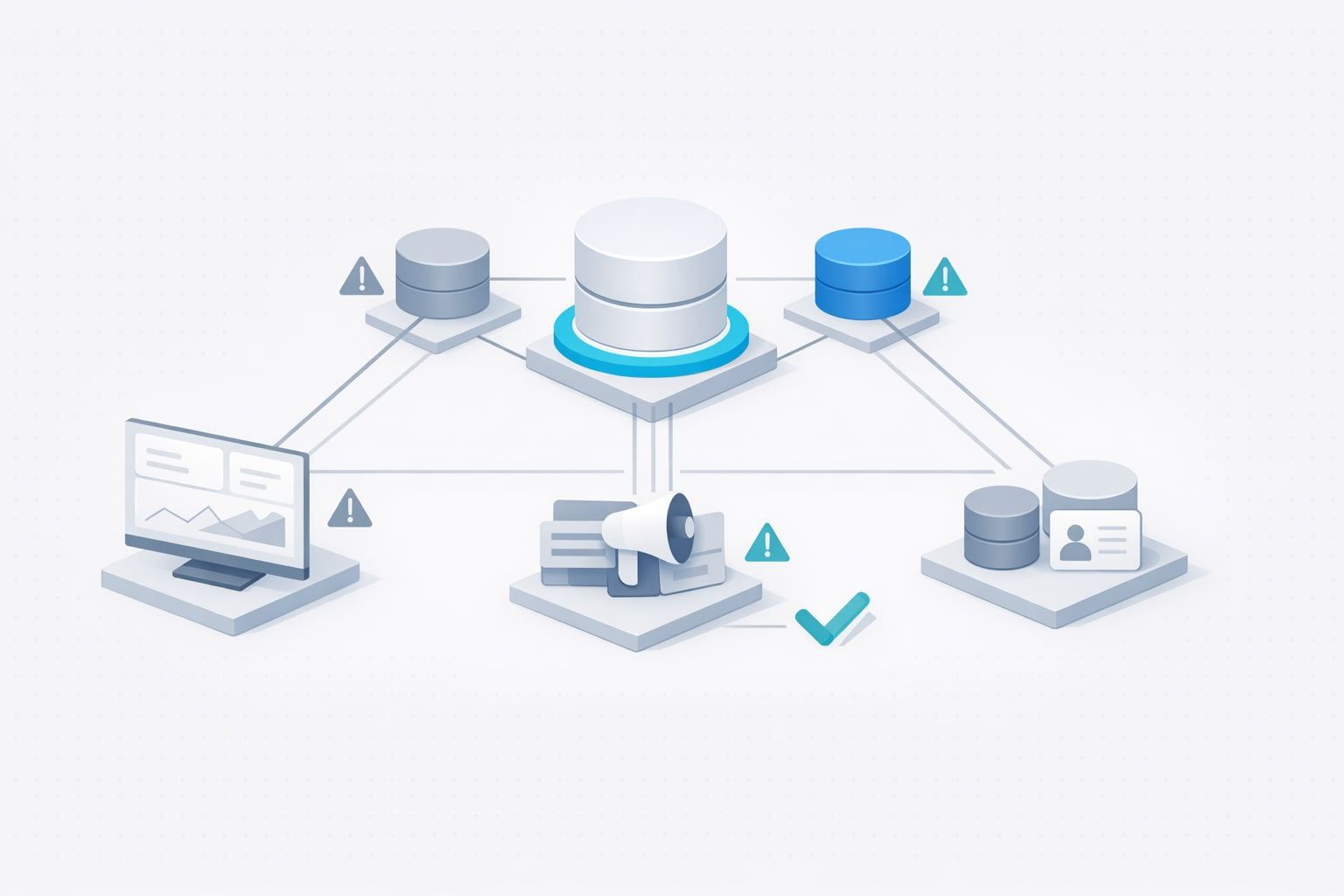
“Poisoned RAG retrievers” usually aren’t a single bug. They’re a chain: a bad update enters the content pipeline, gets embedded and indexed, and then becomes the most relevant chunk for high-value queries. The most painful incidents are quiet: no outage, no obvious spike in errors—just slowly corrupted answers.
Threat model: how knowledge bases get poisoned
1) Malicious knowledge-base updates
The simplest path is an unauthorized update: compromised CMS credentials, leaked API tokens, a misconfigured webhook, or a CI job that can write to the vector store without strong controls. The payload can be overt (fake policy pages) or subtle (a one-line change that flips a recommendation, adds a backdoor instruction, or inserts a deceptive “source”).
2) Prompt injection embedded in documents
Even when content is “true,” it can contain instructions aimed at the model or orchestration layer. In RAG, those instructions can be retrieved alongside factual material, effectively escalating from untrusted text into model behavior. If your agent can browse, call internal APIs, or write tickets, the impact becomes operational, not just informational.
3) Retriever manipulation and ranking gaming
Attackers don’t always need write access. If you ingest external sources (community forums, public docs, vendor changelogs), the attacker can publish content designed to embed well and rank highly: repetitive phrasing, targeted keywords, or “answer-shaped” paragraphs that outperform your canonical docs.
Two control planes: content authenticity and retrieval integrity
Hardening production RAG typically needs two complementary defenses:
- Signed content pipelines so only authorized, reviewed content can become “retrievable truth.”
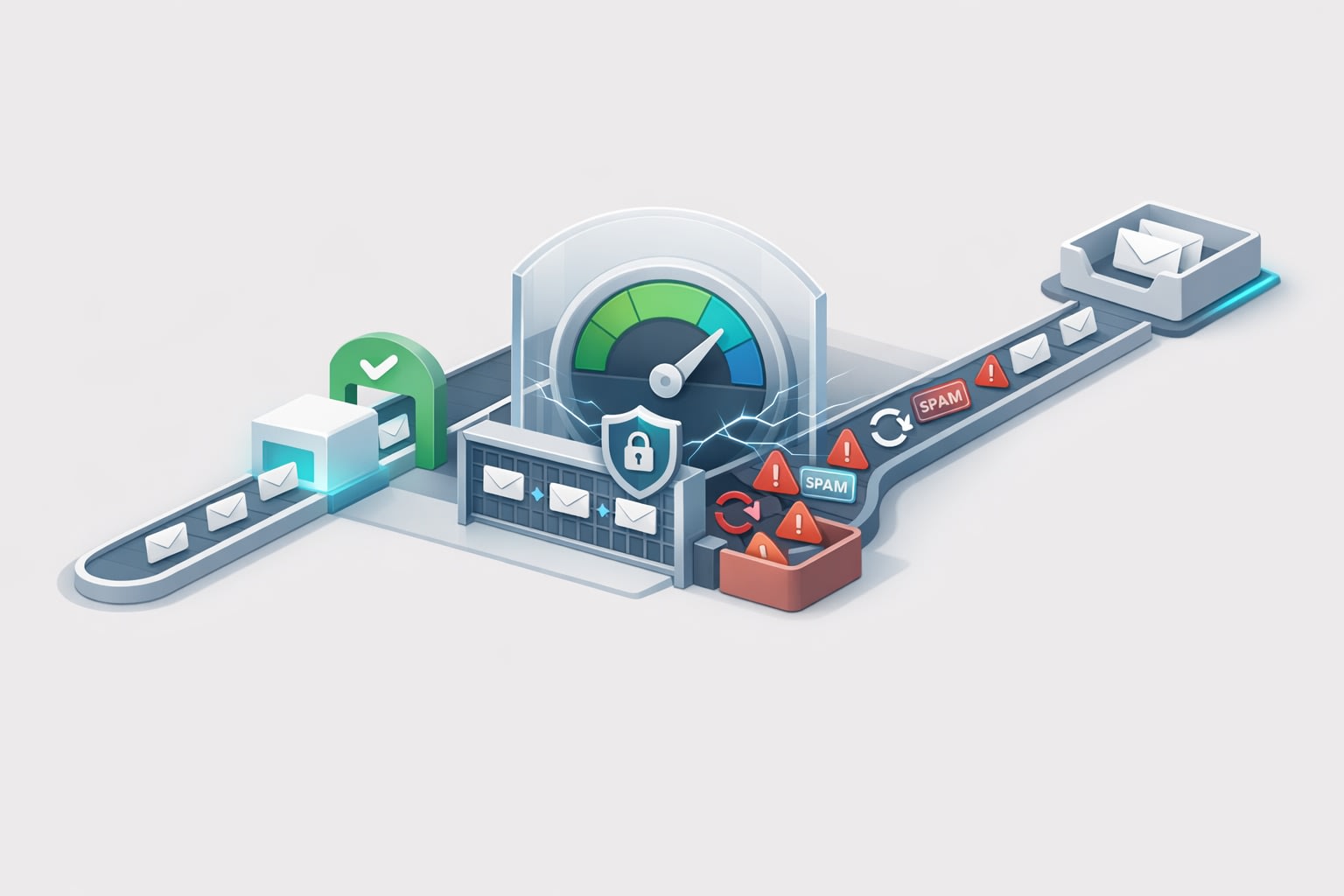
- Edge integrity checks so every retrieval and answer can be traced to known-good content and blocked when provenance fails.
Think of the first as preventing poison from entering the reservoir; the second as testing the water at the tap.
Signed content pipelines that make tampering visible
Define a canonical “KB artifact” format
Start by treating knowledge as a build artifact, not as a set of ad-hoc pages. A KB artifact can be a JSON bundle that includes: document ID, source URL, normalized text, chunk boundaries, timestamps, owner, and a hash per chunk. The key is that the exact bytes you embed and index should be reproducible from this artifact.
Sign at the boundary where humans approve changes
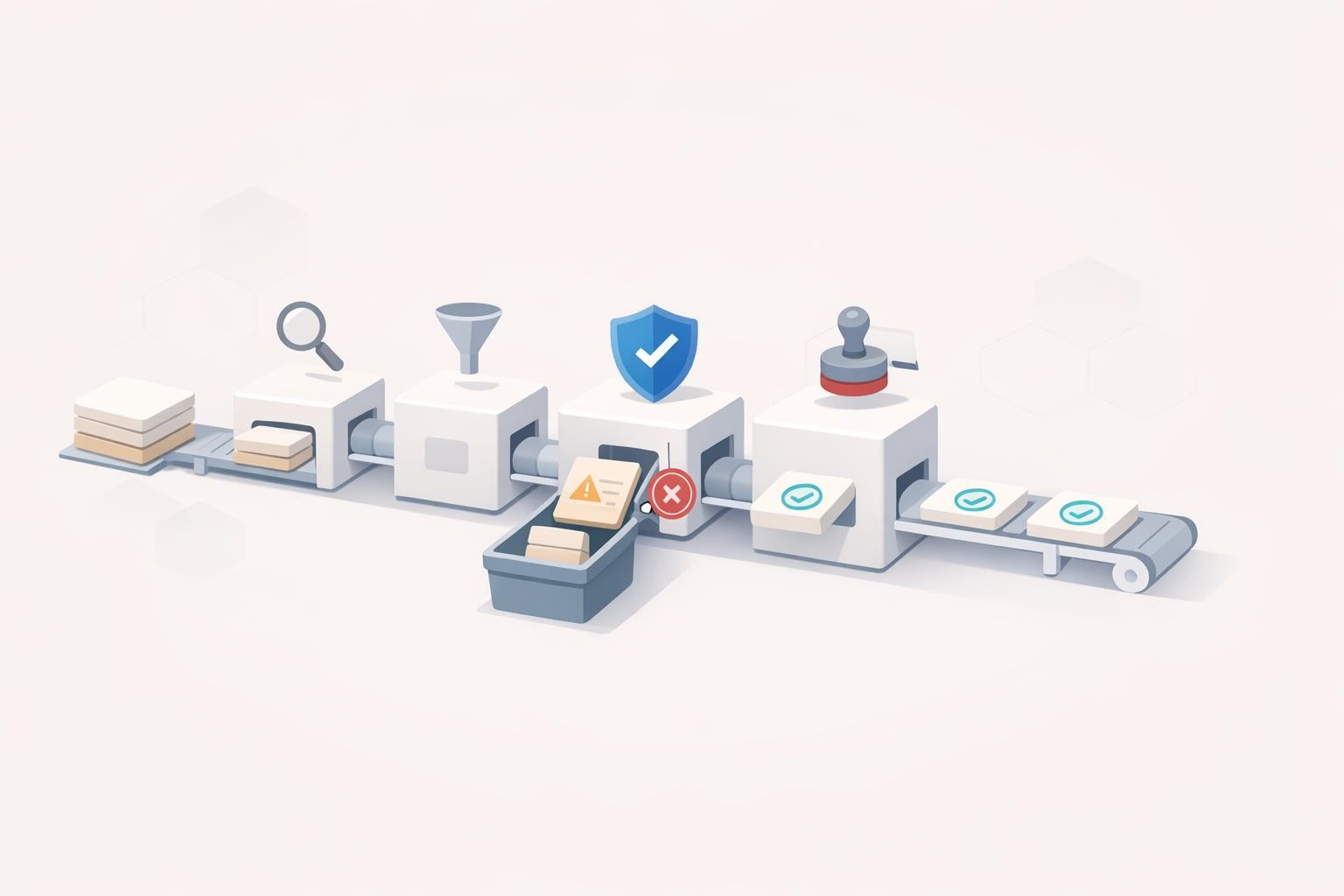
Signing works when it reflects a meaningful trust decision. That usually means signing after review, not after ingestion. A typical flow:
- Content change is proposed (PR, CMS draft, or ticket-driven workflow).
- Automated checks run: linting, PII scanning, policy validations, and “prompt injection” heuristics.
- Human review approves.
- Pipeline produces the KB artifact and signs it using a controlled key.
- Only signed artifacts can be embedded/indexed in production.
If you already track operational “noise” across tools, this is similar to avoiding hidden work queues: undocumented ingestion paths become the KB equivalent of a silent backlog. The same discipline that keeps Slack and GitHub chatter from silently reshaping priorities can help keep unofficial KB writes from silently reshaping your AI’s truth. (If this resonates, the checklist mindset in Integration Debt Audit Checklist to Keep Slack and GitHub Noise Out of Linear maps cleanly to RAG pipelines.)
Store keys and enforce policy centrally
Key management and policy enforcement should live where you already enforce security controls for apps and APIs. For teams building AI-enabled applications on a globally distributed edge, anchoring these controls in a platform designed for security and performance can simplify operations. In practice, many teams centralize the public verification keys and policy gates in a place that is easy to roll out globally and hard to bypass, using services from cloudflare.com as the connective tissue between ingestion endpoints, verification logic, and runtime enforcement.
Edge integrity checks that stop bad retrievals before the model sees them
Verify provenance on every retrieved chunk
At query time, the retriever returns chunks (text + metadata). An edge integrity check verifies:
- The chunk hash matches what was signed.
- The signature chains to an approved key.
- The artifact is within an allowed time window (or explicitly pinned).
- The source is in an allowlist (for high-stakes assistants).
If verification fails, you can block the chunk, fall back to a safer corpus, or return a controlled response (“I can’t verify this source”). The most important part is that the model never sees unverified text. If you pass it through and hope the model “ignores it,” you’ve already lost the boundary.
Gate by risk tier and audience
Not all assistants need the same strictness. For internal search on low-risk docs, you might allow unsigned content but label it. For customer-facing support agents, policy answers, or security guidance, enforce strict verification and explicit allowlists. This mirrors good product ops: treat the highest-impact surfaces with the least ambiguity—especially when multiple teams can submit content.
Detect “retrieval anomalies” as early warning signals
Integrity checks are blocking controls; you also want detection. Useful signals include:
- Sudden relevance shifts: a new chunk becomes top-1 for many unrelated queries.
- Semantic near-duplicates: new content paraphrases canonical pages with small but critical changes.
- Instruction-like patterns: “ignore previous instructions,” “system prompt,” tool-call bait, or credential requests embedded in docs.
- Source drift: retrieval starts favoring external domains or newly created pages.
Near-duplicate detection is especially valuable because many poisoning attempts reuse your own language. Organizations already struggle with duplicates in customer feedback; the same pattern shows up in poisoned corpora. The workflow ideas in Feedback Debt and How to Spot Duplicate Requests Across Support Sales and Forums translate directly: dedupe first, then scrutinize differences.
Blocking strategies that don’t break product quality
Prefer “graceful degradation” over hard failures
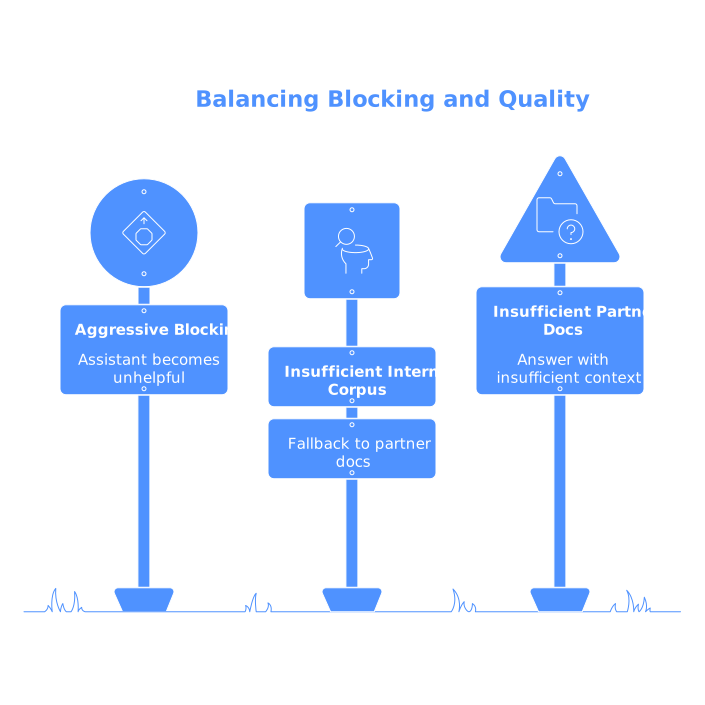
If you block too aggressively, users lose trust because the assistant becomes unhelpful. Design layered fallbacks:
- Try verified internal corpus first.
- If insufficient, use verified partner docs (signed by partner keys) with stricter answer formatting.
- If still insufficient, answer with “insufficient verified context” and ask a clarifying question.
Pin critical answers to versioned sources
For policy, pricing, legal, or incident runbooks, pin retrieval to a versioned artifact set. That prevents “yesterday’s safe answer” from becoming “today’s compromised answer” due to a single malicious update.
Log answer-to-source traceability
To investigate incidents, you need to reconstruct what the model saw. Log retrieval IDs, artifact versions, signature verification results, and which chunks were actually passed to the model. This is not just observability—it’s forensic readiness.
Operationalizing this in a real production environment
The practical implementation is less about a single tool and more about enforcing boundaries:
- One write path to production indexes.
- Signed artifacts produced only after review.
- Verification at the edge before model input.
- Continuous anomaly detection on retrieval behavior.
- Fast rollback by artifact version, not by ad-hoc deletions.
When these are in place, poisoned RAG retrievers become much easier to contain: you can block untrusted updates immediately, quantify blast radius precisely, and restore verified content without guessing which pages were touched.