Warmup reputation leakage and how to stop non-warmup signals from hurting inbox placement
Jamie
Warmup reputation leakage is why “the warmup looks fine” but real sends still land in spam
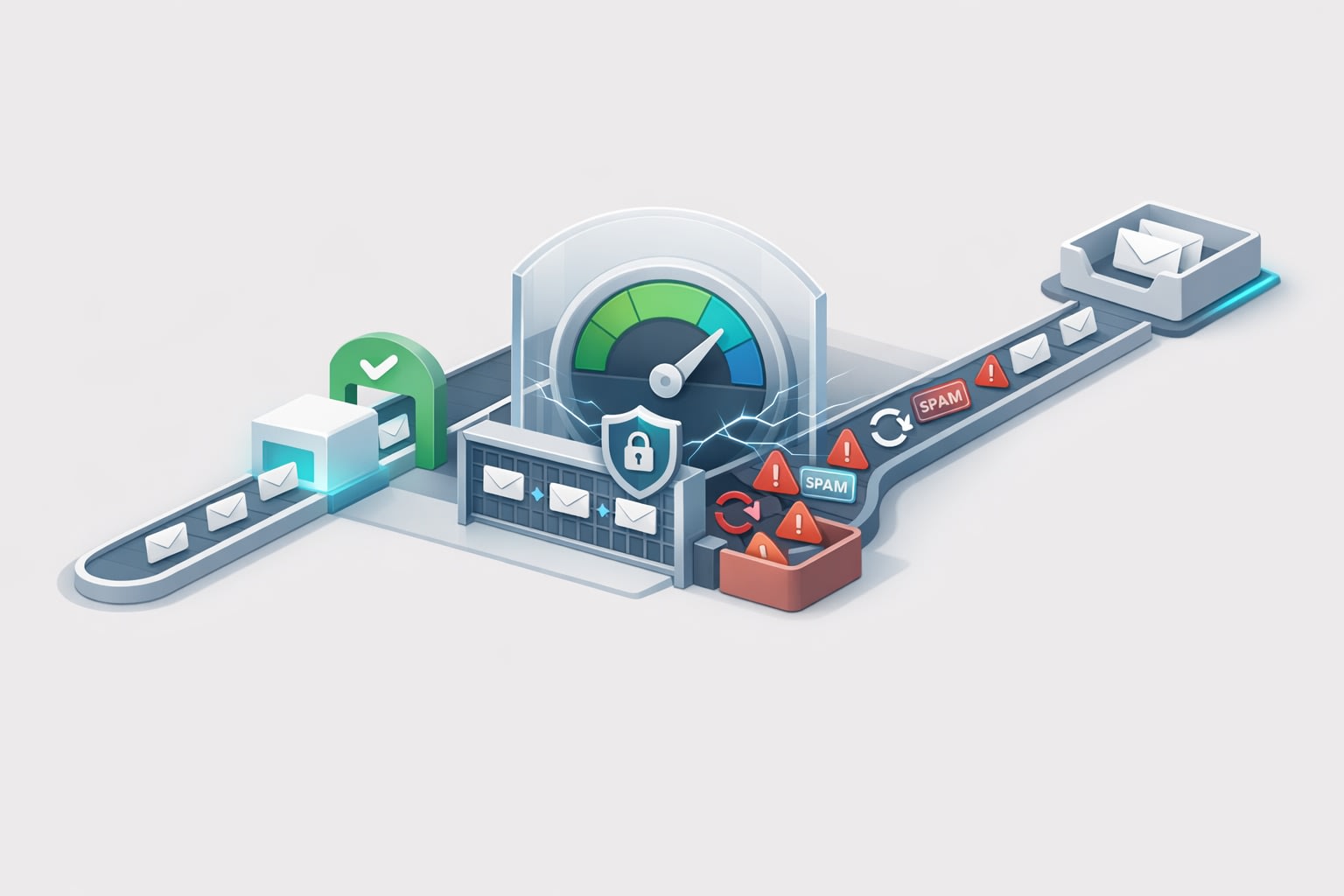
Email warmup is designed to create clean, positive engagement signals: opens, replies, threads, and “not spam” rescues that teach mailbox providers you’re a legitimate sender. The problem is that mailbox providers don’t score your warmup stream in a vacuum. They score you—your domain, mailbox, and sometimes your IP—across all outbound traffic. That’s where warmup reputation leakage happens: unsubscribes, bounces, and spam complaints from non-warmup campaigns quietly override the good signals your warmup is producing.
This is most common when teams run warmup on one mailbox while a different workflow (cold outreach, product onboarding, support notifications, partner updates) continues sending at low volume without the same hygiene. Warmup looks stable, yet inbox placement degrades because negative signals are being generated elsewhere and attributed to the same sender identity.
What counts as “non-warmup” signals that can leak into your reputation
Warmup traffic is usually controlled: limited volume, known recipients, engineered engagement. Non-warmup traffic is messier, and the following signals are particularly reputation-sensitive:
Unsubscribes that indicate expectation mismatch
Unsubscribes aren’t always “bad,” but a spike is often a proxy for misaligned targeting, stale lists, or sending something recipients didn’t expect. Some mailbox providers treat heavy unsubscribe behavior as a quality signal even when users follow the proper unsubscribe flow.
Hard bounces that imply poor list hygiene
Repeated “user unknown” or invalid address bounces are a strong indicator of list quality problems. Even if your warmup emails never bounce, your reputation can still be pulled down by a separate campaign hitting old or scraped addresses.
Spam complaints that directly damage trust
Complaint rate is one of the clearest negative signals. The catch: complaints can come from just one stream (for example, a cold sequence) while your warmup stream remains pristine. The mailbox provider sees the complaints tied to the sender identity, not to your internal labeling of “warmup” vs “not warmup.”
Inactivity and low engagement on “real” mail
If your real sends are ignored—no opens, no replies, no clicks—your engagement profile can look weak. Warmup engagement can help, but it doesn’t always offset a larger volume of ignored real mail, especially if recipients are new and untrained to your domain.
Why mailbox providers merge these signals in the first place
From the provider’s perspective, a sender is an identity that must be evaluated consistently. Even when your warmup tool generates healthy inbox interactions, the provider still sees the total pattern: who you send to, how often, how many addresses are invalid, how recipients react, and whether the mail looks consistent with normal human sending behavior.
That’s why it’s possible to warm up responsibly and still struggle: the warmup channel is producing positive signals, but the overall sender profile is receiving negative feedback elsewhere.
Common situations where leakage happens without anyone noticing
You warm up a mailbox, but your domain is sending from other mailboxes
Teams often warm up one outreach account while the main domain continues sending product or marketing email from other accounts. If those other accounts bounce or trigger complaints, the domain-level reputation can be affected, undermining the warmed mailbox’s gains.
Cold outreach shares the same domain as transactional email
When cold outreach and transactional messages share a domain (or closely linked sender identity), negative feedback from prospecting can bleed into the trust needed for receipts, invites, and support threads. This is especially painful because transactional email is often time-sensitive and user-visible.
After a pause, you “restart” with mixed traffic
Coming back from a sending break is a classic moment for leakage: warmup resumes slowly, but the business also turns on real campaigns quickly, producing bounces/complaints before reputation has stabilized. If you’re dealing with a restart scenario, the mechanics of recovery and pacing matter; the sending cadence itself can become part of the problem. For the broader deliverability context of stoppages, see why pausing email sending can hurt deliverability and how to recover after a break.
How to isolate warmup signals from non-warmup damage
You can’t force mailbox providers to “only grade the warmup.” What you can do is design your measurement and operations so you can pinpoint which stream is generating negative feedback and stop it before it contaminates the sender identity further.
1) Separate measurement by mailbox, domain, and campaign
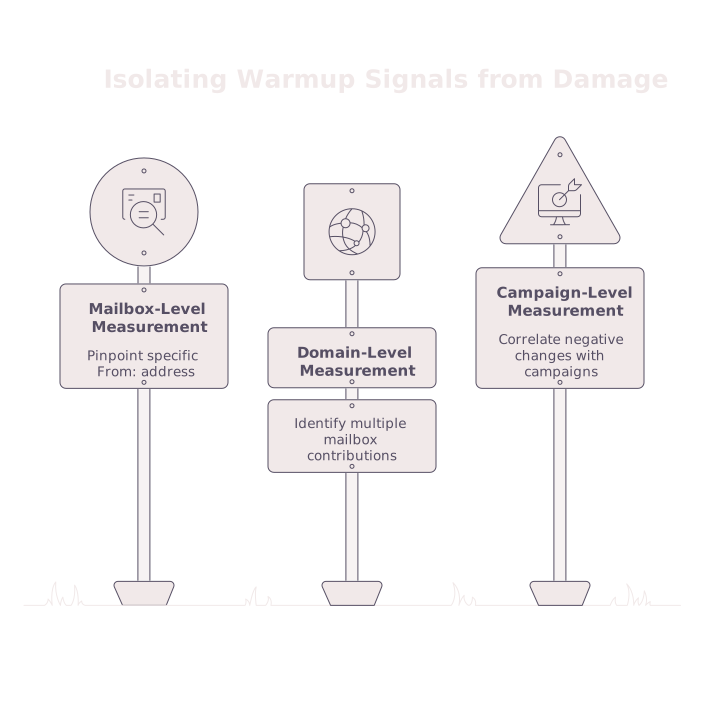
Track metrics at three levels:
- Mailbox-level: which specific From: address is seeing bounces, complaints, or engagement drops.
- Domain-level: whether multiple mailboxes on the same domain are contributing to reputation shifts.
- Campaign-level: which list source, segment, or sequence correlates with the negative change.
A practical approach is to keep a weekly “deliverability changelog” that records every sending change (new list source, new template, new volume cap, new mailbox added). When inboxing changes, you have a short list of suspects.
2) Treat complaints and hard bounces as stop-the-line events
If complaint rate rises or hard bounces spike, don’t average it out over time. Stop the offending stream, identify the list source, and fix the acquisition/hygiene issue. Warmup can support recovery, but it won’t reliably “outvote” ongoing negative signals.
3) Run controlled “holdout” tests for real sends
To locate the leak, temporarily pause one non-warmup stream (for example, a single cold sequence or a single segment) while leaving warmup unchanged. Watch for improvement in placement and engagement on other streams. This is one of the fastest ways to identify which campaign is polluting reputation.
4) Align volume ramping with your actual send irregularity
Leakage is amplified when you’re low-volume and irregular: a few complaints or bounces can dominate your signal profile. If your sending pattern is naturally uneven, your warmup and your campaign pacing must reflect that reality. The mechanics of warming for irregular sending are covered well in the low-volume trap and how to warm up inboxes for irregular sending.
5) Keep warmup running while you clean the “real” pipeline
Warmup is most useful when it’s stable and continuous, because it keeps a baseline of healthy interactions while you fix list hygiene, targeting, and content. A platform like mailwarm helps here by generating authentic engagement signals across major providers and maintaining consistent activity, which is especially helpful when your production sending is being throttled or temporarily reduced during cleanup.
Operational fixes that reduce leakage long-term
- Segment by intent and expectation: Keep “requested” email (users, trials, customers) operationally separate from speculative prospecting.
- Harden list hygiene at the source: Validate addresses, sunset old lists, and remove repeated hard bounces immediately.
- Stabilize sending cadence: Avoid sudden jumps that force providers to re-evaluate you under stress.
- Template discipline: Don’t rotate radically different copy/styles across streams at the same time you ramp volume.
Warmup reputation leakage isn’t mysterious once you measure it correctly. The key is to treat warmup as one controlled signal stream inside a broader sender system—and to isolate, pause, and repair any non-warmup stream that’s generating the negative feedback your warmup can’t hide.