Stop Revenue Reporting Mismatches Between Your CRM, Ad Platforms, and Analytics
Jamie

Why revenue numbers drift across tools
If your CRM says you closed $120k, your ad platforms claim $160k, and your analytics tool reports $95k, the uncomfortable truth is usually simple: you don’t have a single source of record for revenue. You have several systems that each believe they “own” the truth, each with different identities, timestamps, and rules.
This conflict gets worse as your stack grows. The more you rely on self-serve attribution dashboards, offline conversions, lead routing, and multi-touch reporting, the more chances you create for the same deal to be counted twice—or not counted at all.
Define “source of record” before you pick a tool
A source of record is not “the tool we look at most.” It’s the system that wins when two systems disagree. To make that decision, you need to separate three different concepts that commonly get lumped together as “revenue”:
- Commercial truth: what finance recognizes (invoiced revenue, cash received, refunds, credits).
- Sales truth: what the CRM tracks (pipeline, closed-won value, expected ARR, renewal expansions).
- Marketing truth: what attribution tools estimate (conversion value attributed to touchpoints and campaigns).
When teams fight about which number is right, it’s often because they’re asking one tool to answer a question it wasn’t designed to answer. A CRM can be the source of record for “closed-won revenue booked by sales,” while finance is the source of record for “recognized revenue,” and marketing reporting is a modeled view anchored to whichever truth you choose to export.
The common reasons CRM, ads, and analytics disagree
Different event timing
Analytics tools often record a conversion at the moment of form submit or checkout. CRMs record opportunity changes later (qualified, accepted, closed-won). Ad platforms can record conversions when they receive a signal—sometimes days later—after enrichment, deduplication, or offline upload. If you compare “today’s revenue” across systems without aligning event definitions and windows, you’re guaranteed mismatches.
Identity breaks between click, user, lead, and account
Ad platforms identify people with click IDs and device identifiers. Analytics might use cookies or user IDs. The CRM uses email, lead IDs, and account IDs. Each handoff creates a join problem: if the click ID isn’t captured, persisted, and attached to the right CRM record, offline conversion uploads will be partial. If a lead converts on one device and buys on another, analytics may undercount. If sales merges duplicates, the ad platform won’t know unless you dedupe intentionally.
Different definitions of revenue value
One system may send a fixed “lead value.” Another sends expected LTV. Another sends first invoice amount. Another uses gross revenue while finance cares about net of refunds. Without a controlled definition, you’re not arguing about measurement—you’re arguing about meaning.
UTM and naming chaos
Campaign naming drift is a quiet revenue killer in reporting. One variant like “Brand_Search” vs “brand-search” can split performance, mis-route attribution, and make reconciliation feel impossible. If you’ve felt the pain here, the pattern is the same as the broader problem: you need conventions plus enforcement. (Related: The UTM tax and the fix for inconsistent campaign naming.)
Deduplication is applied inconsistently
Analytics tools might dedupe by transaction ID. A CRM dedupes leads by email. Ad platforms dedupe by conversion ID (if you provide one) or by their own rules if you don’t. If you upload offline conversions without stable IDs, it’s easy to double count when the same opportunity is updated, re-uploaded, or imported by multiple systems.
A practical operating model to stop the conflict
1) Choose one “revenue anchor” and document it
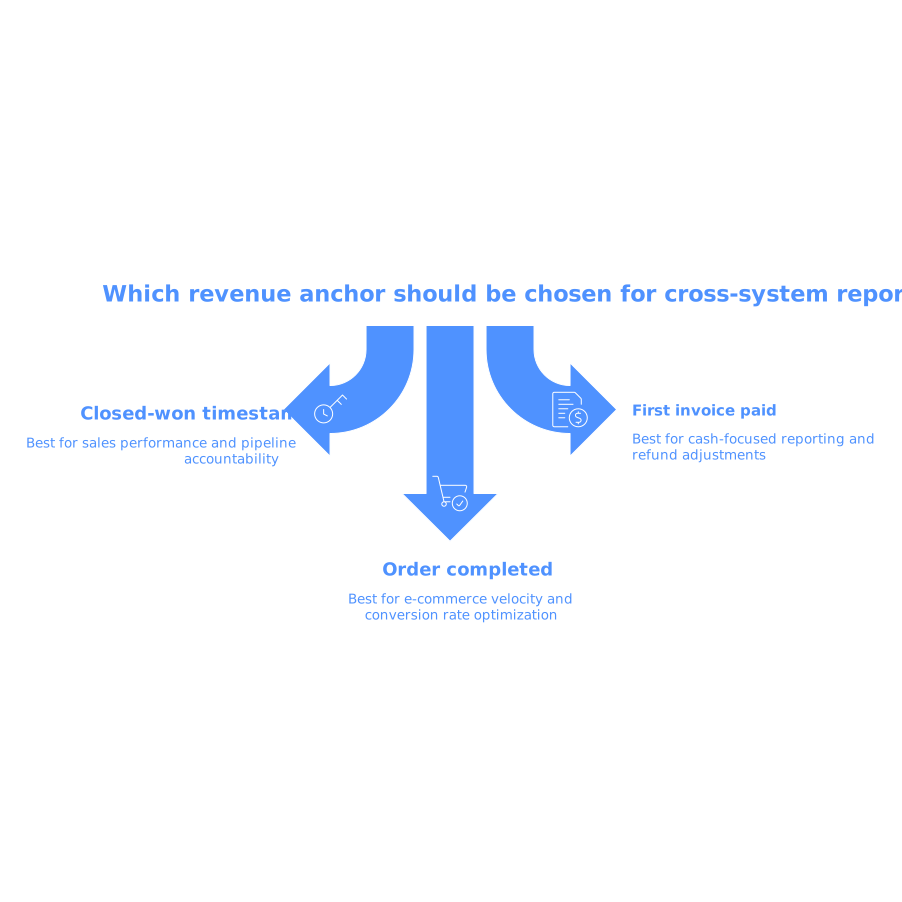
Pick the event that anchors cross-system reporting. Common anchors include:
- Closed-won timestamp (CRM): best for sales performance and pipeline accountability.
- First invoice paid (billing/finance): best for cash-focused reporting and refund adjustments.
- Order completed (commerce/analytics): best for e-commerce velocity and conversion rate optimization.
Whichever you choose, write it down with exact rules: currency handling, tax inclusion, discounts, refunds, partial payments, and how upgrades/expansions are treated.
2) Standardize IDs so every system can reconcile
To make disagreement measurable (and fixable), you need stable keys:
- Conversion ID: a unique ID per conversion event that can be reused for uploads and dedupe.
- Transaction or order ID: critical for commerce and refund matching.
- Opportunity/account ID: critical for B2B and multi-contact buying groups.
- Click IDs (gclid, fbclid, etc.): captured at the edge, stored, and passed through to the CRM record where possible.
This is also where “integration debt” shows up: small inconsistencies across forms, routers, enrichment tools, and reverse ETL jobs compound into unreliable joins. Periodically auditing those handoffs prevents silent breakages. (Related: Integration Debt Audit Checklist to Keep Slack and GitHub Noise Out of Linear.)
3) Separate attribution reporting from revenue truth
Attribution is a model layered on top of a revenue anchor. It should never be the revenue anchor itself. If you treat ad platform dashboards as the source of truth, you inherit black-box logic, view-through rules, and platform-specific incentives. Instead, treat platform dashboards as diagnostics for optimization, and run your canonical reporting where you can control definitions and joins.
4) Build a single, analysis-ready dataset for performance reporting
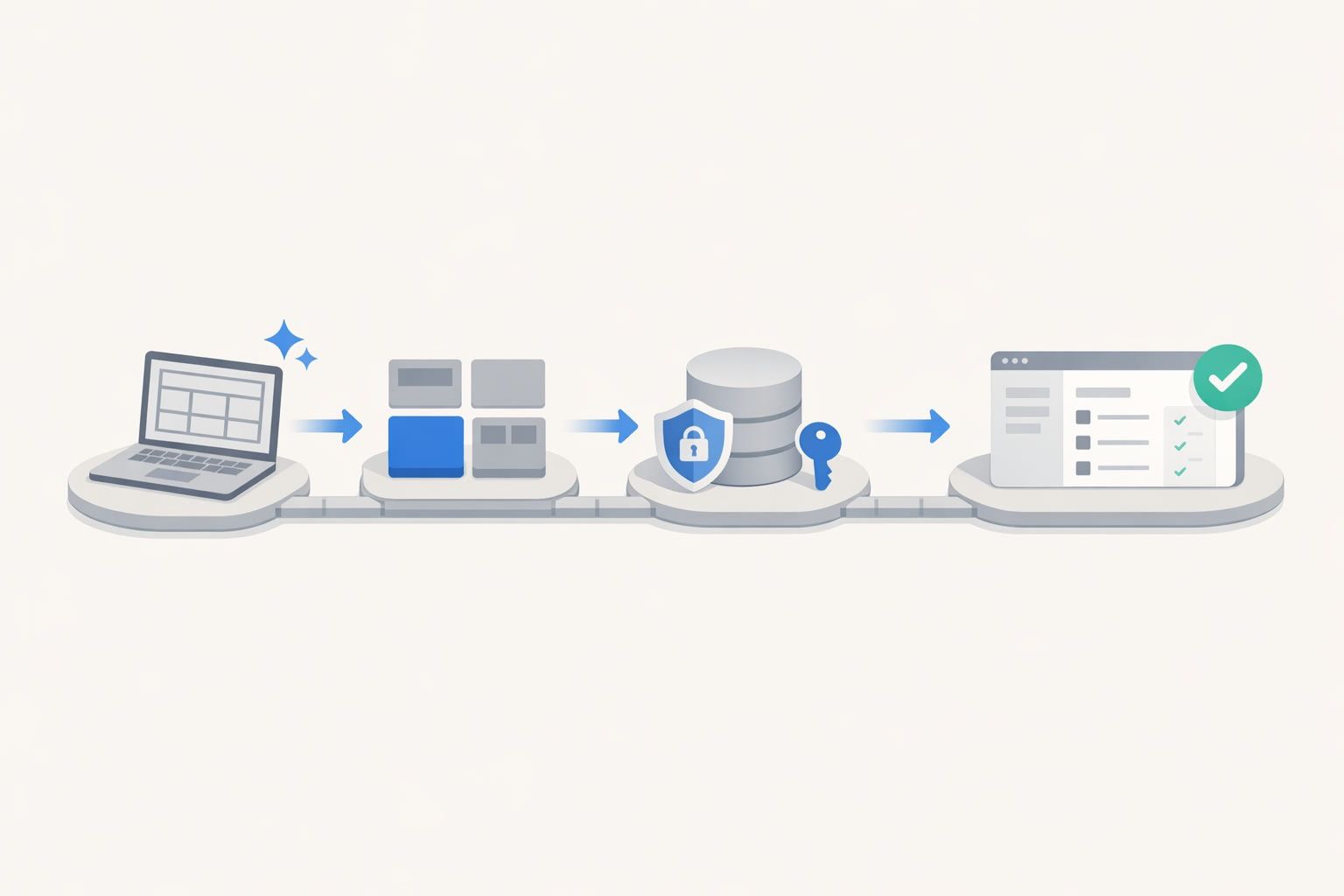
Once you’ve agreed on an anchor and IDs, the next challenge is operational: getting consistent, refreshed, normalized data from every ad platform, analytics tool, and CRM into one place where transformations are governed.
This is exactly the kind of problem marketing data infrastructure is meant to solve. With Funnel.io, teams can connect channels once, continuously refresh performance data, harmonize naming, convert currencies, and standardize metrics so reporting isn’t rebuilt in every dashboard or spreadsheet. The key is that you can enforce the same definitions across tools, so “revenue” doesn’t change depending on who opened which platform.
5) Reconcile on a schedule with a clear mismatch playbook
Even mature stacks won’t match perfectly every day. What matters is having a predictable reconciliation workflow:
- Daily: monitor ingestion freshness, missing spend, and sudden drops in conversions (often tracking or API failures).
- Weekly: reconcile by campaign/channel at a coarse level to catch naming splits, late conversions, and broken mappings.
- Monthly: reconcile revenue anchor totals to finance/CRM, including refunds, credits, and currency adjustments.
When a mismatch appears, your playbook should answer: Is it timing (lag), identity (missing IDs), definition (value rules), or duplication (double uploads/merges)? That framing turns “we don’t trust the data” into a short list of testable hypotheses.
What “fixed” looks like in practice
You don’t need every tool to show the same number in its native UI. You need:
- One documented revenue anchor that is used for canonical reporting.
- Consistent IDs so records can be joined and deduped deterministically.
- Governed transformations so naming, currency, and KPI calculations don’t diverge by team.
- Regular reconciliation so disagreements get resolved instead of normalized.
Once those are in place, the conversation shifts from “which tool is right?” to “what does our agreed definition say?”—and revenue stops being a debate.