The Silent Queue Problem and How to Keep Customer Bugs From Derailing Your Roadmap
Jamie
The “silent queue” problem
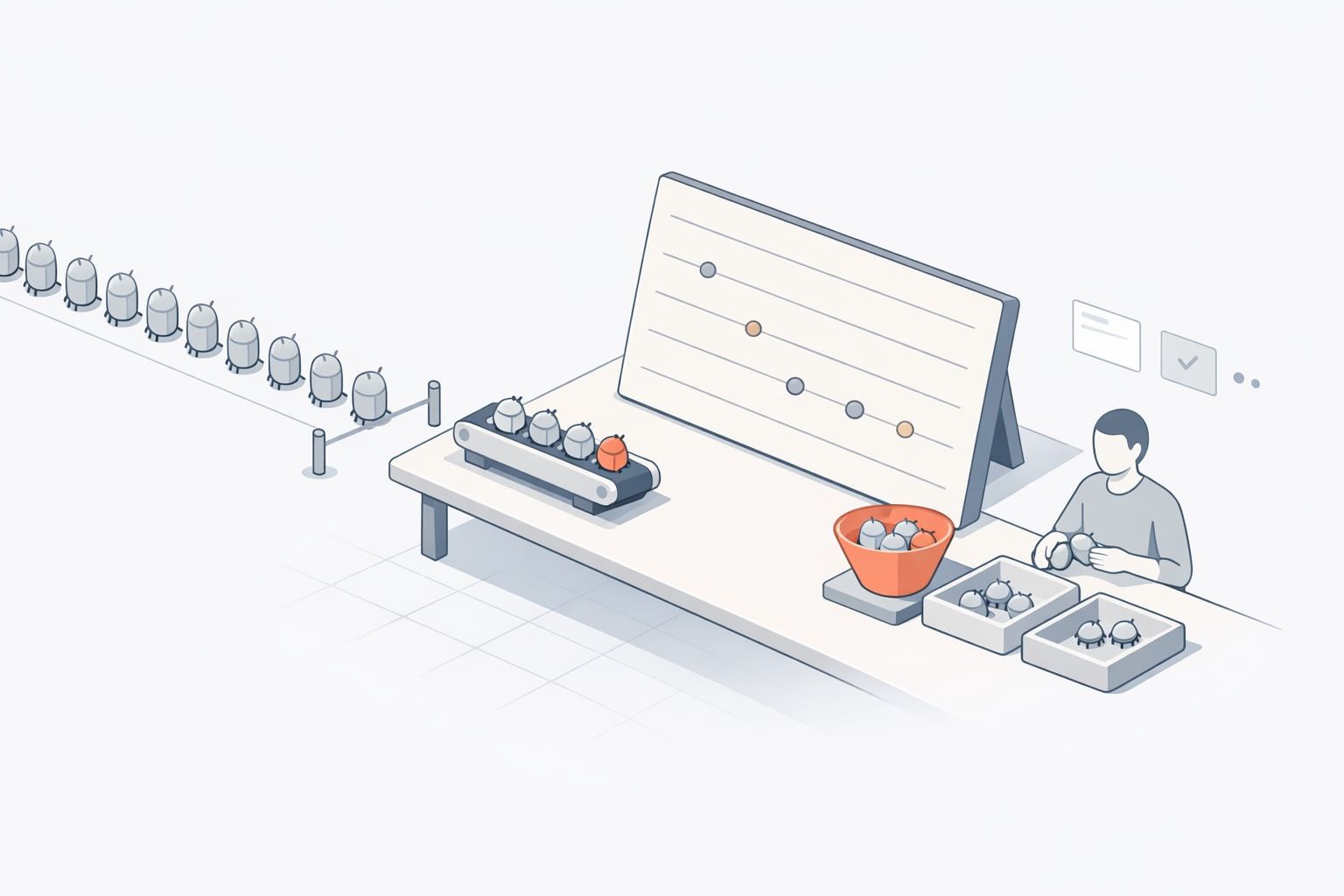
Every product team has a visible queue: the roadmap, the sprint board, the official backlog. But most teams also have a second queue that doesn’t look like one. It lives in Zendesk tags, Slack threads, forwarded emails, sales notes, community posts, and “quick questions” from customer success. It rarely gets triaged end-to-end, yet it quietly drives what gets built.
That shadow pipeline is the silent queue: customer-reported bugs and product paper cuts that keep reappearing in different channels, creating urgency without clarity. The risk isn’t that customer bugs exist. The risk is that the team starts reacting to the loudest signal, and the roadmap becomes a series of interruptions.
The goal isn’t to create a second backlog. It’s to create a system that turns repeated customer pain into structured decisions—without letting every new ping rewrite your plan.
Why customer bugs derail roadmaps in the first place
1) Bugs arrive as stories, not tickets
A support message is rarely “Bug: race condition in webhook retry logic.” It’s “Invoices are missing again.” That forces product and engineering to translate symptoms into an actionable issue, and that translation often happens ad hoc—meaning it’s easy to do it twice.
2) Volume is hidden by fragmentation
One request in support feels small. The same request in support, sales, and the forum is a pattern. But when the signals are split across tools, the pattern stays invisible and the team underestimates impact until churn risk spikes.
3) Triage becomes an interruption loop
Without a clear intake rule, every new report triggers a “Can someone check this?” cycle. Engineers context-switch, PMs renegotiate priorities, and the team feels busy while shipping less.
4) Your roadmap absorbs uncertainty
When teams can’t distinguish “edge-case annoyance” from “systemic failure,” they either overcorrect (panic re-planning) or underreact (slow, accumulating trust loss). The silent queue thrives in that uncertainty gap.
A practical model for handling customer bugs without creating a second backlog
You need one system of record for product work, plus lightweight mechanisms that connect customer signals to that system. A good issue tracker helps because it makes the cost of structure low: consistent fields, fast triage, and clear ownership. Teams using linear.app often benefit from its speed and opinionated workflow because it’s easier to keep intake disciplined when the tooling doesn’t feel heavy.
Step 1: Define what qualifies as a “customer bug” worth routing
Not every complaint should become an issue. Start with a short routing policy that your support, sales, and success teams can follow. For example:
- Route immediately: data loss, security/privacy risk, payment failures, core workflows blocked.
- Route when repeated: the same symptom reported by 3+ accounts in 14 days, or by 1 strategic account with verified repro.
- Do not route as bugs: usability suggestions without breakage, feature gaps, “how-to” questions (these can be tracked differently).
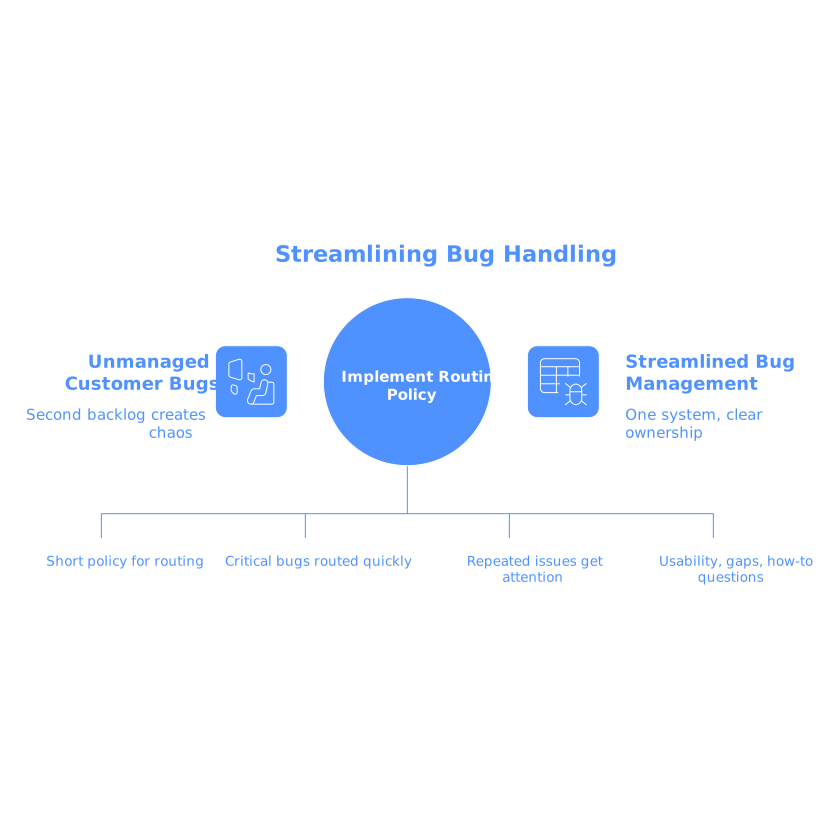
The point is to reduce noise while ensuring real failures aren’t trapped in inboxes.
Step 2: Normalize intake with a single “bug report packet”
Make it easy for non-engineers to submit usable bug reports. A simple template prevents the silent queue from becoming an endless clarification thread. Require:
- Customer/account and plan tier
- Business impact (blocked, degraded, annoyance)
- Repro steps or a session recording
- Expected vs. actual behavior
- Frequency (once, intermittent, always)
- Environment (browser/device, API endpoint, integration)
When intake is standardized, you can triage quickly without re-investigating the same case across channels.
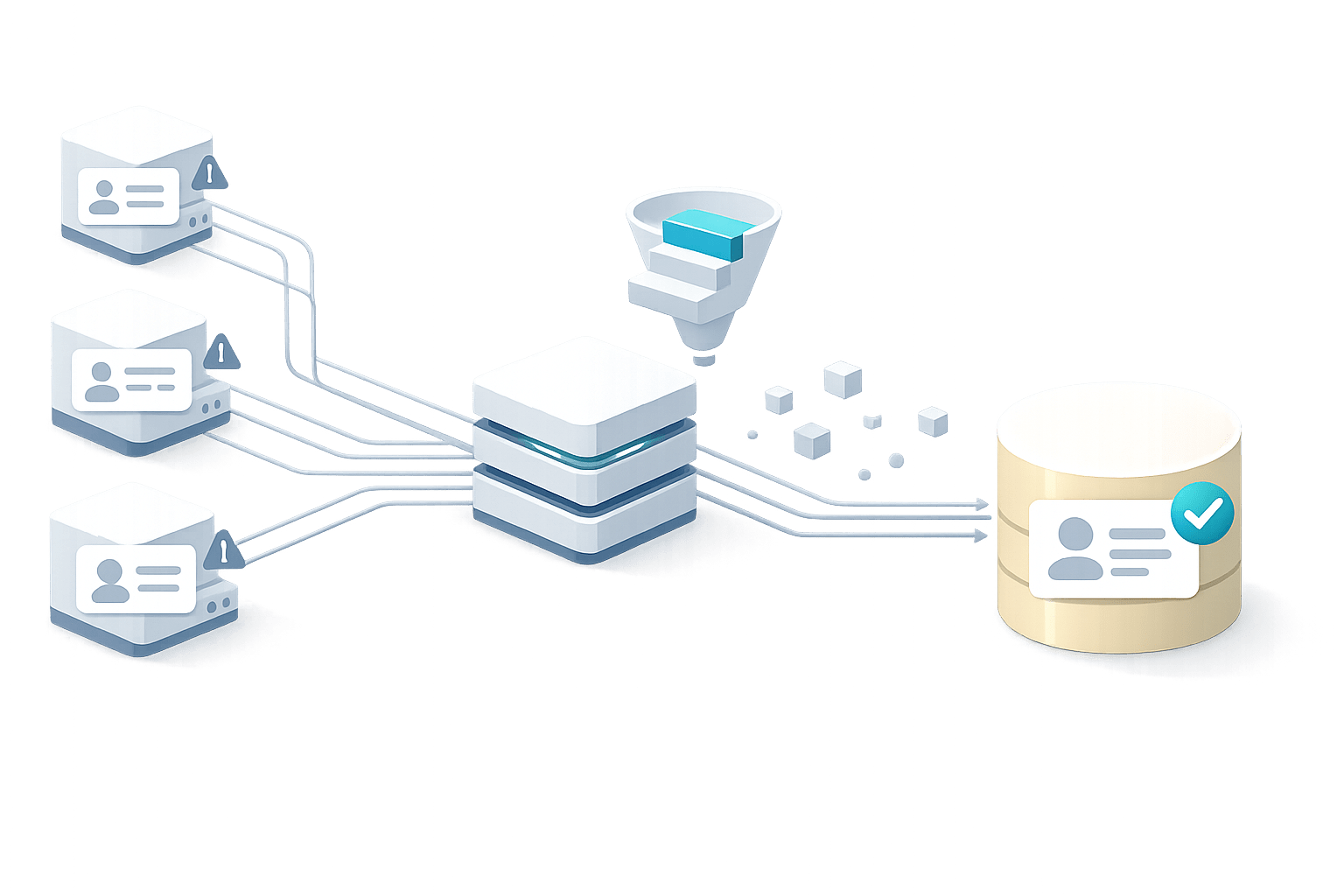
Step 3: Deduplicate aggressively before you prioritize
The silent queue is mostly duplicates disguised as new information. Treat deduplication as a first-class step, not an afterthought. If you skip it, you’ll overestimate workload and underestimate impact.
Practically, build a habit of linking new reports to an existing canonical issue whenever possible. Maintain one “source of truth” issue per underlying defect and attach:
- Related support tickets
- Sales notes and lost-deal reasons
- Forum threads and comments
- Workarounds and known limitations
If duplicate requests are a recurring pain, it’s worth putting a real process around it rather than relying on memory. This is closely related to spotting cross-channel repetition and avoiding “feedback debt,” where the same request is handled repeatedly but never consolidated. A useful reference is how to spot duplicate requests across support, sales, and forums.
Step 4: Separate triage from scheduling
Most roadmap derailment happens because teams treat “triaged” as “scheduled.” You can acknowledge and structure a bug without committing to immediate work.
Use a two-stage workflow:
- Triage stage: validate, reproduce, scope, assign severity, link duplicates, capture impact.
- Scheduling stage: decide when it enters a cycle/sprint based on severity, frequency, and roadmap constraints.
This creates a buffer where information can accumulate without forcing constant replanning.
Step 5: Use explicit severity and impact signals
Severity alone isn’t enough. “High severity” for one small customer might be less important than “medium severity” hitting dozens of accounts weekly. Consider a simple matrix:
- Severity: data loss, security, financial, core workflow blocked, degraded, cosmetic.
- Reach: number of accounts affected, plus whether it impacts strategic customers.
- Frequency: intermittent vs. consistent.
- Confidence: confirmed repro vs. suspected.
When these fields are consistently captured, prioritization becomes a decision, not a debate.
Step 6: Create a “bug budget” that protects the roadmap
Roadmaps fail when bug work is treated as unlimited. Instead, allocate capacity explicitly. Examples:
- Fixed percentage: e.g., 20–30% of each cycle reserved for bugs and reliability.
- Rotating on-call engineer for product bugs: one person handles incoming triage and small fixes, shielding the rest of the team.
- Reliability sprint every N cycles: scheduled time to pay down accumulated defects.
The number isn’t universal; the discipline is. By pre-allocating capacity, you avoid the false choice between “ignore customers” and “throw away the plan.”
Step 7: Close the loop with a customer-facing status habit
Silent queues also persist because customers keep asking when they don’t hear back. You don’t need detailed timelines; you need consistent status updates. For each canonical bug, maintain a clear internal state (“investigating,” “planned,” “in progress,” “fixed in version X”) and a short customer-safe message support can reuse.
This reduces re-triage churn and builds trust even when the fix isn’t immediate.
How to tell if you’re already running a silent queue
- Engineers get pulled into support threads several times a week for the same area of the product.
- PMs frequently reshuffle upcoming work due to “urgent” customer reports with unclear frequency.
- The team debates severity because impact evidence is scattered across tools.
- Customers report “still broken” issues after releases because duplicates weren’t consolidated and validated.
The outcome you’re aiming for
A healthy system doesn’t eliminate customer bugs. It makes them legible. The silent queue stops being a shadow backlog when customer signals reliably converge into one canonical issue, that issue carries structured impact data, and scheduling is governed by capacity rules rather than interruptions.
Whether you implement this with lightweight conventions or fully within a tool like Linear, the core principle is the same: one roadmap, one source of truth, and a repeatable path from “customer pain” to “planned work.”