Closing the Internal API Gap with Versioning Contract Tests and Canary Rollouts
Jamie
The internal API gap shows up when scripts become endpoints
Many teams start by wiring a “quick script” behind a webhook: a Python file that syncs CRM data, a TypeScript handler that enriches events, a Bash wrapper around a database export. It works—until those scripts become depended on like real APIs.
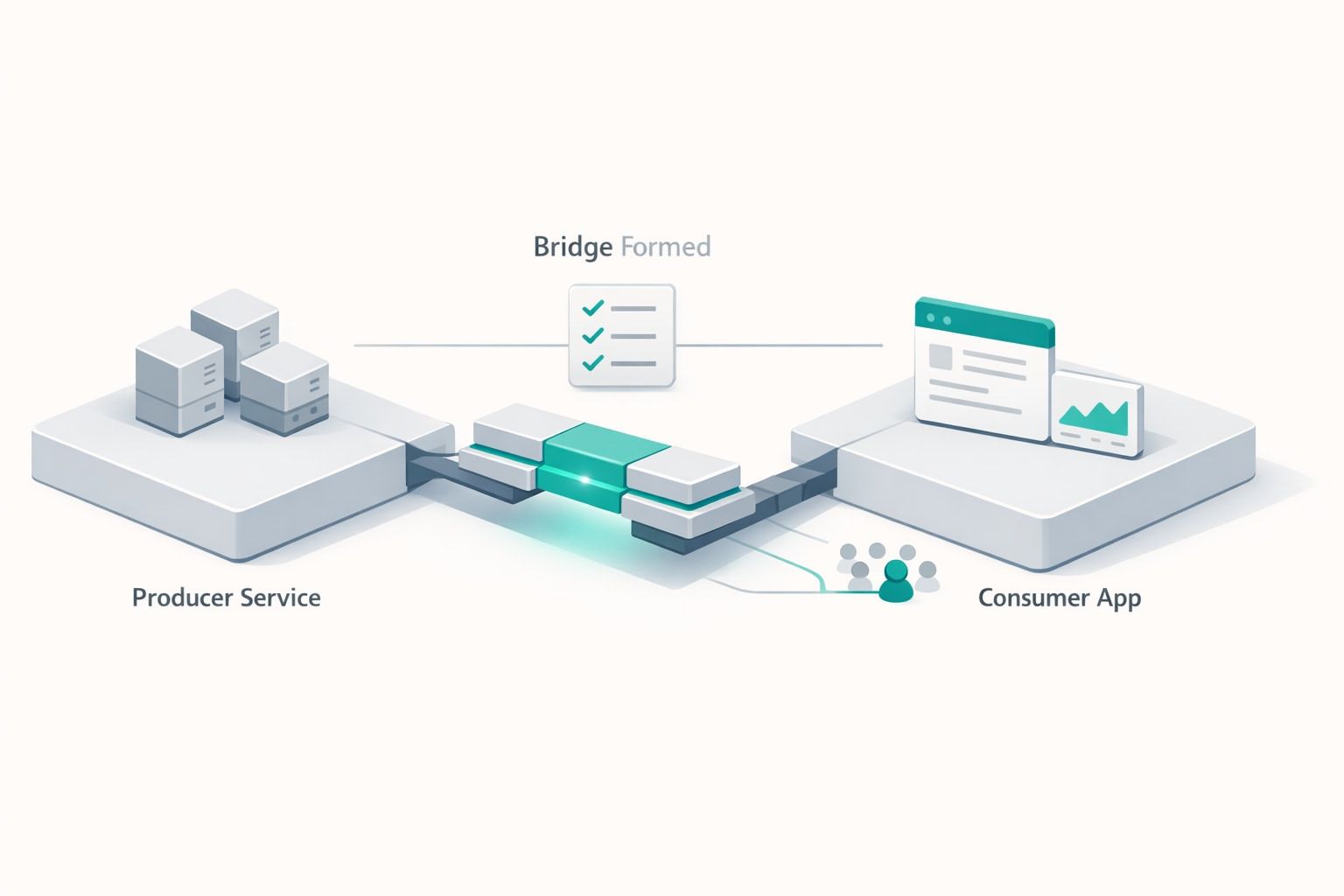
That’s the internal API gap: you have API-like consumers (dashboards, internal apps, automations, other services), but you don’t have the API-grade practices that keep changes safe. When a script-backed endpoint changes behavior, it breaks quietly, and the support queue (or the on-call rotation) absorbs the blast radius.
The good news is you don’t need to build an internal platform to close that gap. You can adopt three lightweight practices—versioning, contract tests, and canary rollouts—using the tooling you already have. And if you are using a code-first system that can expose scripts as endpoints, like windmill.dev, you can apply these practices with less glue code and more observability.
1) Versioning that fits script-backed endpoints
Internal endpoints often change faster than public APIs, but “internal” doesn’t mean “safe to break.” The trick is to pick a versioning approach that matches how scripts are actually used.
Prefer immutable versions over mutable “latest”
Script endpoints commonly default to “call whatever is deployed.” That’s convenient, but it couples every consumer to every deploy. A safer model is:
- Immutable version identifiers for consumers: a path segment, header, or explicit “version” parameter.
- Mutable aliases only for humans: “dev”, “staging”, “prod”, or “latest” for manual testing.
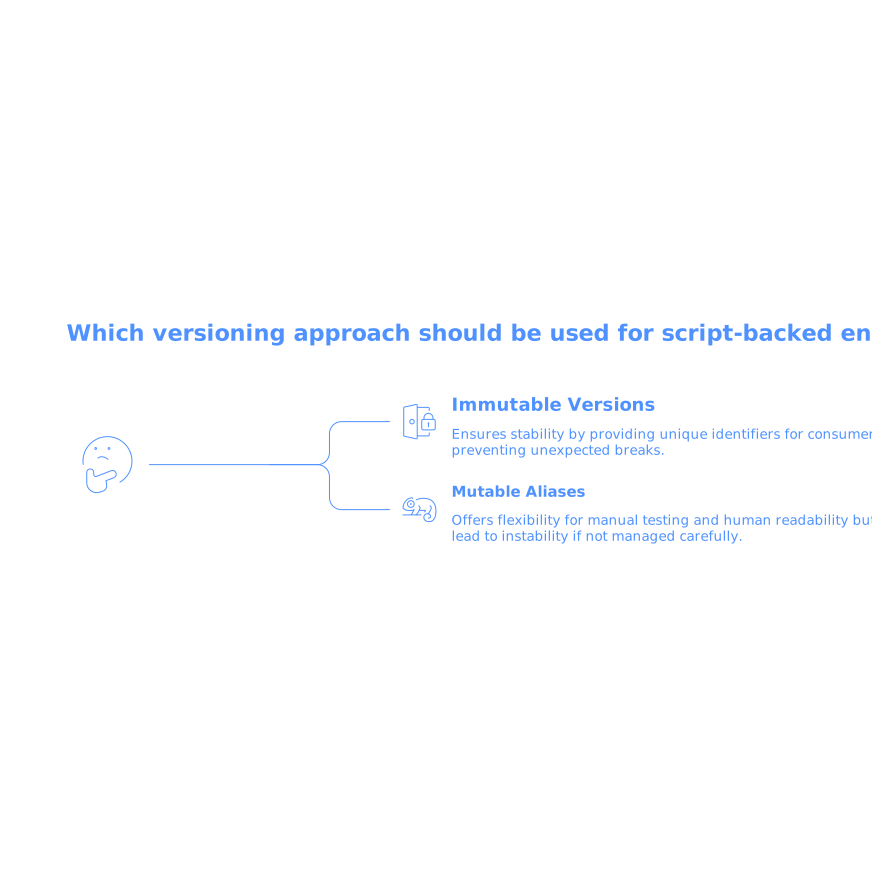
For example, instead of always calling /internal/syncCustomers, consumers call /internal/syncCustomers/v3 (or send X-Internal-Version: 3). Your deploy pipeline can still update an alias like prod, but production callers aren’t forced to track it.
What to version when the script is the API
Versioning isn’t only about the URL. For script-backed endpoints, you should consider versioning:
- Input schema (fields, types, required vs optional).
- Output schema (shape, enum values, sorting guarantees, nullability).
- Side effects (writes to systems, idempotency rules, retries, dedupe logic).
- Operational behavior (timeouts, rate limiting, pagination defaults).
If any of those change in a way consumers can notice, it deserves a new version, even if the code change looks small.
One practical policy that keeps teams honest
- Backward-compatible additions (new optional fields, new output fields) can stay within the same major version.
- Breaking changes (renames, removals, behavior changes, stricter validation) require a new major version.
- Each major version has a clear owner and a deprecation date.
This keeps “internal API hygiene” from turning into endless process.
2) Contract tests that catch drift before it hits consumers
Unit tests are necessary, but they rarely protect consumers from contract drift. Contract tests focus on what callers need: request/response shape, edge cases, and behavioral guarantees.
Start with a schema contract, even if you don’t adopt full OpenAPI
You can define contracts in several lightweight ways:
- JSON Schema for request/response payloads.
- Type-level contracts (TypeScript types + runtime validation).
- Pydantic models for Python endpoints.
The key is runtime validation in tests (and ideally at the edge), not just compile-time types.
Consumer-driven checks without a platform team
In many orgs, the consumers are known: a Retool dashboard, a scheduled job, a Slack command, a data pipeline. You can implement consumer-driven contract tests by storing “golden” fixtures per consumer:
- Example request payloads that represent real usage.
- Expected response schema validation.
- Behavioral assertions: idempotency on retries, stable pagination, consistent error codes.
Run these tests against the versioned endpoint in CI before you promote it. This is especially valuable for internal scripts because their callers are often brittle and undocumented.
Test the failure modes explicitly
Most internal breakages aren’t the “happy path.” They’re partial outages and messy inputs. Add contract tests for:
- Missing optional fields and extra unknown fields.
- Downstream dependency failure (CRM timeout, database lock).
- Rate-limit and retry behavior (including jitter and dedupe keys).
- Permission boundaries (RBAC/SSO constraints for internal callers).
These tests turn “tribal knowledge” into executable guarantees.
3) Canary rollouts that fit scripts, webhooks, and cron-triggered jobs
Canaries aren’t only for microservices. A script-backed endpoint can be canaried if you control how traffic is routed or how jobs are scheduled.
Three canary patterns that work for internal endpoints
- Header-based canary: a subset of callers sends
X-Canary: 1to hit the new version. - Shadow mode: run vNext in parallel, compare outputs, but only vCurrent produces side effects.
- Segmented execution: only certain tenants, projects, or business units use the new version first.
Shadow mode is especially effective when side effects are risky. You can log diffs and performance metrics without risking data changes.
Define the rollback trigger before you deploy
A canary without clear rollback criteria turns into “wait and hope.” Decide ahead of time:
- Error rate threshold (5xx, validation failures, downstream errors).
- Latency regressions (p95/p99).
- Business correctness signals (counts, totals, reconciliation checks).
Then automate rollback to the previous version or alias. The fastest rollback is switching routing—not reverting code.
Observe like it’s production, even if it’s “internal”
Canaries require tight feedback loops: logs, traces, alerts. If you already execute scripts as endpoints, use tooling that gives you real-time logs and structured outputs per run. This is where a product like Windmill can help without forcing you to build a bespoke platform: scripts stay code-first, but you get execution history, alerting, and worker isolation patterns that make canaries practical for internal teams.
Putting it together as a minimal workflow
If you want a concrete, low-overhead cadence, this works well for most teams:
- Create vNext (immutable version) alongside vCurrent.
- Run contract tests against vNext in CI using stored fixtures.
- Deploy vNext behind a canary mechanism (header, segment, or shadow).
- Monitor and compare for a fixed window (hours to days depending on volume).
- Promote by updating a routing alias or consumer configuration.
- Deprecate vCurrent on a date, with clear owner and notification.
Most importantly, keep the surface area small. You’re not building a platform; you’re adding guardrails around the scripts that already behave like APIs.
Two common failure patterns to watch for
Silent breakages from “support signal lag”
Internal API failures often show up days later as complaints, manual workarounds, or “it seems slow lately.” If you recognize this pattern, it’s usually a symptom of weak observability and missing contracts. The operational angle is similar to what happens when bug reports don’t reach product planning in time; the internal queue goes quiet, then explodes later. The dynamics are explored in the silent queue problem, and the fix is the same: shorten the loop with explicit signals.
Dependency drift across scripts and runtimes
Script-backed endpoints often share libraries informally (“just pip install that package”). That makes behavior changes hard to predict across versions. If you’re juggling Python, TypeScript, and Go scripts, deterministic dependency pinning and repeatable builds matter for reliable canaries and contract tests. If you want a deeper checklist, see deterministic dependency management for internal scripts.