Feedback Drift Audit to Keep Feature Requests Aligned With Your ICP
Jamie
What “feedback drift” looks like in real product teams
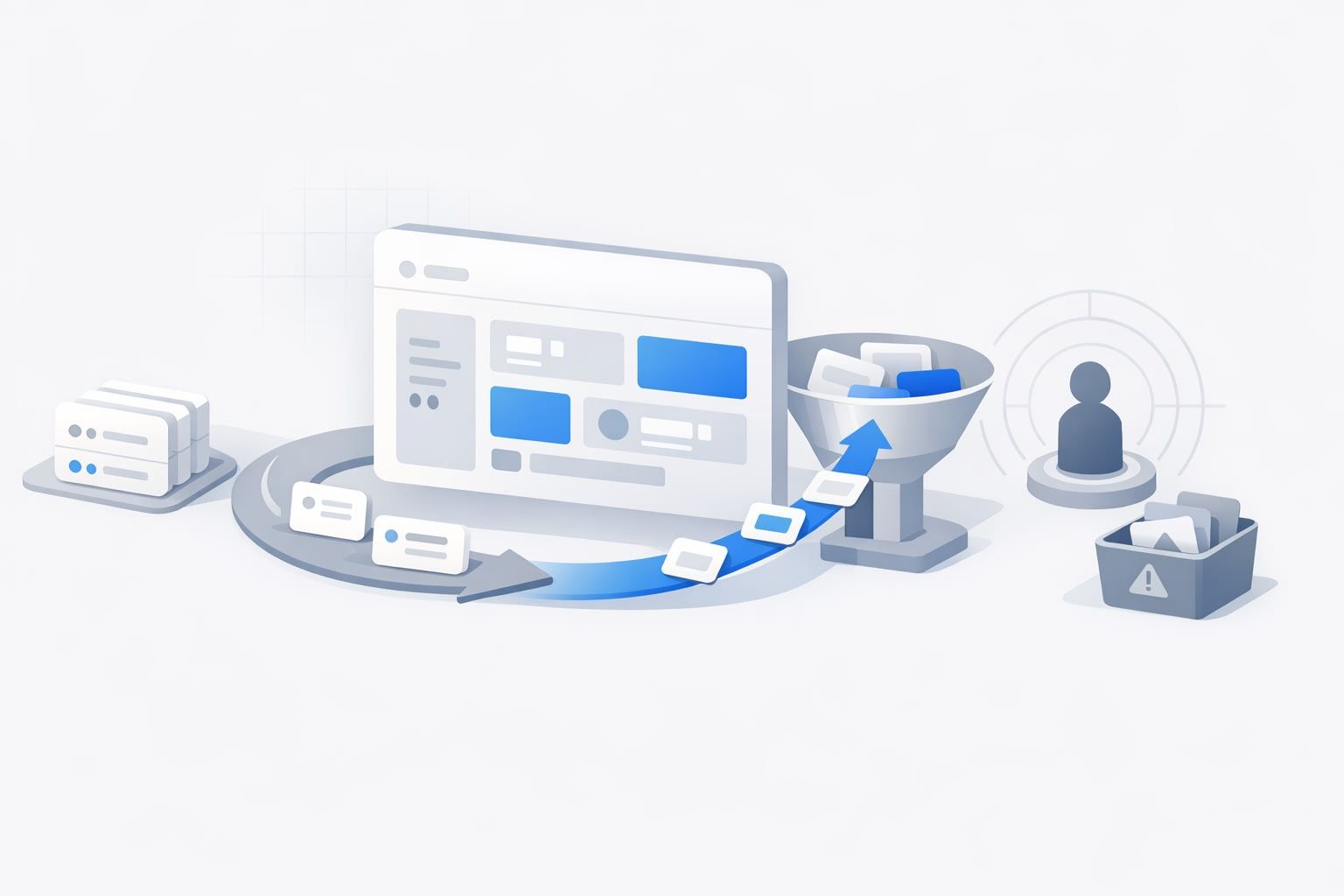
Feedback drift is what happens when feature requests keep coming in, but the mix quietly shifts away from the customers you’re actually building for. You still have “lots of demand,” but it’s demand from the wrong segments, the wrong use cases, or the wrong stage of maturity. The result is predictable: the roadmap gets crowded with work that creates activity, not progress.
This is rarely caused by a single bad decision. Drift accumulates when you:
- Open more intake channels (support, sales calls, community, chat) without consistent tagging.
- Start serving a new segment (or a few large accounts) and let their requests dominate.
- Rely on anecdotal “loudest customer” signals instead of segment-weighted demand.
- Stop closing the loop, so older requests keep resurfacing with slightly different wording.
A Feedback Drift Audit is a lightweight, repeatable check that tells you whether requests still match your ICP—and what to do before the roadmap breaks.
Step 1: Define the ICP boundaries you will actually enforce
Start with clarity you can operationalize. “Mid-market B2B SaaS” is not enforceable. An audit needs boundaries you can tag and measure against. Write a short ICP rubric your team can apply in under 30 seconds per request:
- Company profile: industry constraints, team size range, compliance needs, typical buying motion.
- Primary job-to-be-done: what customers hire your product to do (and what they don’t).
- Product maturity fit: what level of complexity your product supports today.
- Non-ICP “red flags”: patterns you routinely see from poor-fit accounts.
Then map your existing customer base to 3–6 segments that reflect reality (not marketing). Your segments might include “ICP Core,” “ICP Edge,” “Enterprise Exceptions,” “Legacy,” and “Free/Trial.” The audit is simply a check that your feedback pipeline isn’t drifting toward segments you don’t intend to optimize for.
Step 2: Reconcile feature requests into one deduped system of record
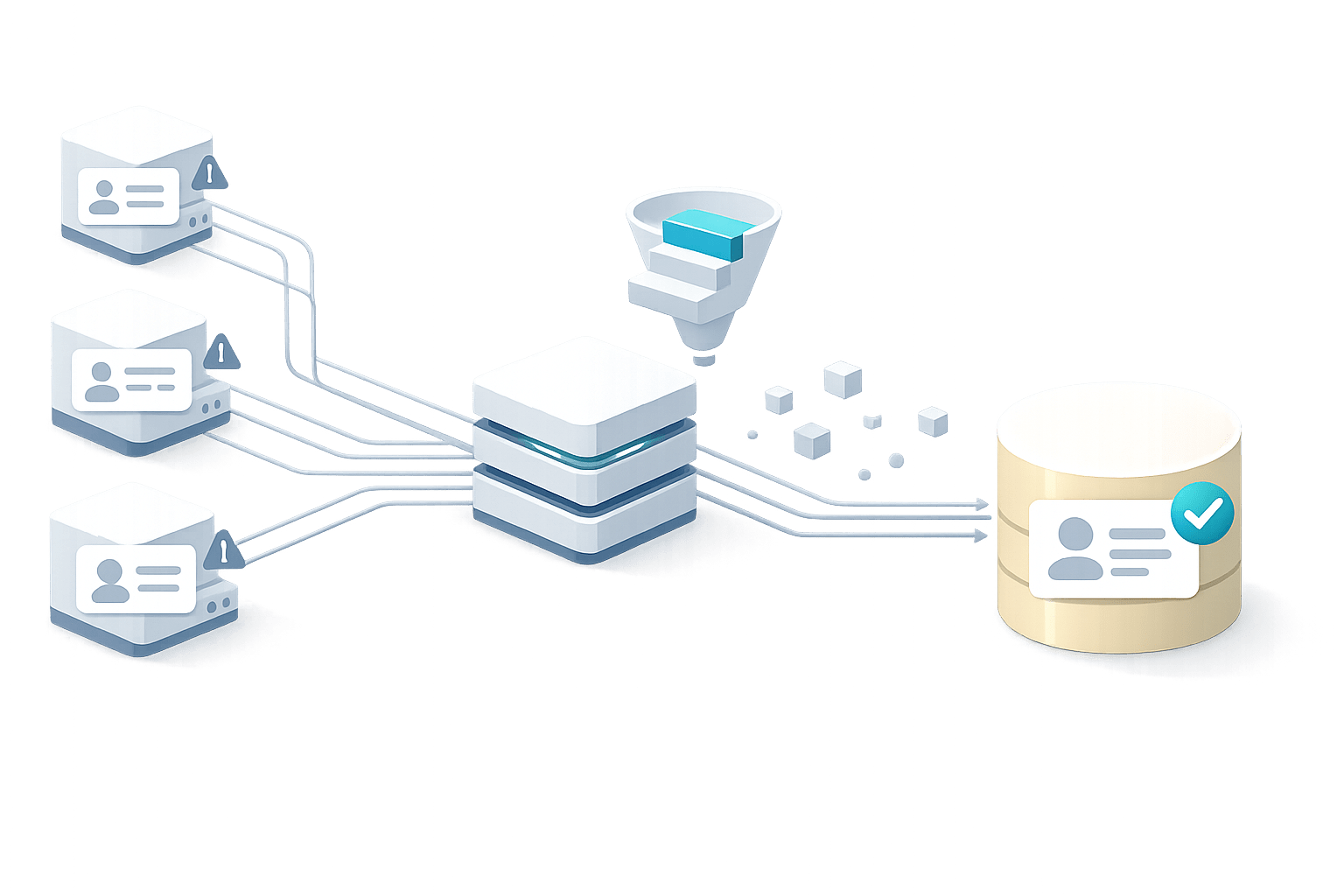
You can’t detect drift if the same request appears five times under slightly different language across tools. Centralize intake and dedupe before you analyze. Platforms like canny.io are designed for this: requests can be captured from a public portal and internal tools, then grouped, merged, and summarized so you can measure demand cleanly.
As a practical rule, run your audit on ideas (deduped themes) rather than raw tickets. If you audit on raw tickets, support-heavy segments will always look “more important” simply because they generate more volume.
If you’re already seeing duplicates or near-duplicates everywhere, fix that first; otherwise your drift diagnosis will be noise. This is closely related to managing “feedback debt,” where unmerged requests inflate perceived demand and distort prioritization. A useful reference is how to spot duplicate requests across support, sales, and forums.
Step 3: Run the drift checks that catch misalignment early
Check A: Segment share of demand vs. segment share of revenue
For your top 20–50 ideas (by votes, ARR impact, or request frequency), calculate:
- Demand share by segment (who is asking).
- Revenue share by segment (who pays you, or who you want to pay you).
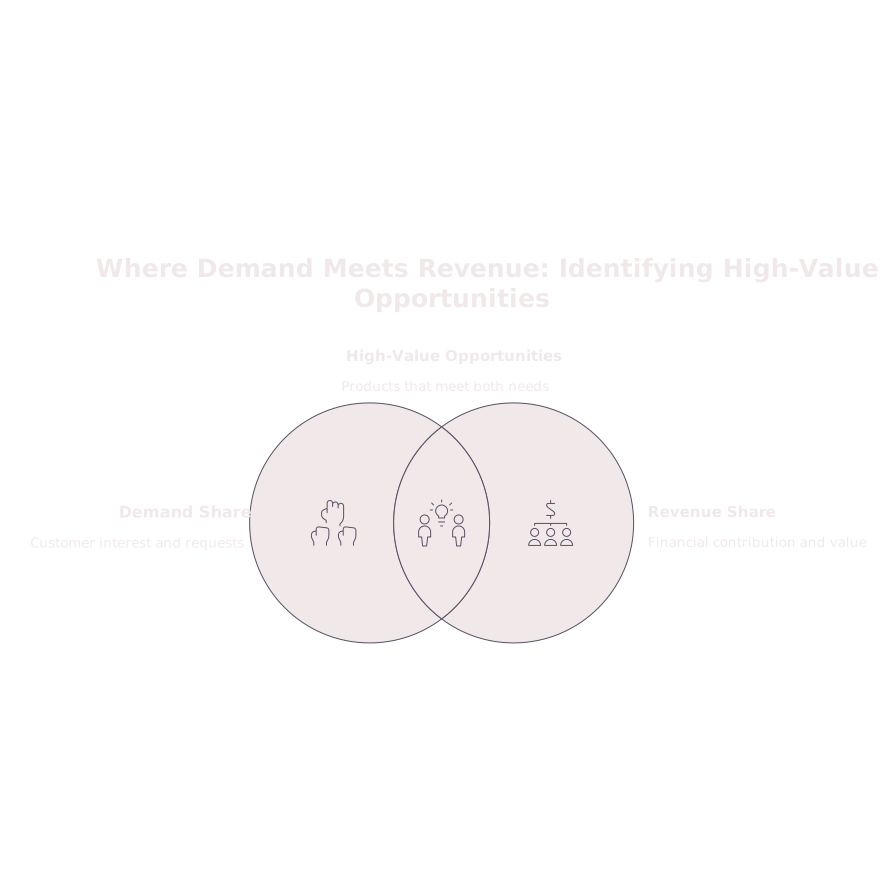
Drift signal: demand is increasingly coming from segments that are flat or shrinking in revenue contribution, or from segments you don’t plan to optimize for.
This requires consistent customer identifiers across CRM, billing, and analytics. If your reporting is messy, you may be misreading drift because the underlying data doesn’t reconcile. (Revenue attribution mismatches are a common cause of “false drift.”)
Check B: Roadmap-to-request fit over the last two cycles
Look at the last two roadmap cycles (for example, the past quarter and the quarter before it):
- Which segments did shipped features primarily benefit?
- Which segments generated the original requests?
- Which segments adopted the shipped features?
Drift signal: you are consistently building for segments that don’t adopt or don’t expand, while ICP Core keeps asking for different fundamentals.
Check C: “Use-case distance” scoring
Not all ICP drift is about company size. Some drift is about use cases that pull the product into a different category. Add a simple 1–3 score per idea:
- 1: directly supports ICP job-to-be-done.
- 2: adjacent, could be valuable but needs careful framing.
- 3: different job-to-be-done (likely drift).
If your top ideas are trending toward “3,” you are being steered into a different product, even if the requesters are paying customers.
Check D: Source-channel bias
Measure where requests originate: support tickets, sales calls, community, in-app prompts, churn interviews, etc. Drift signal: one channel dominates, and that channel overrepresents a non-ICP segment (for example, a few large accounts routed through sales).
A common fix is to rebalance collection: add structured prompts for ICP Core in-app, and require sales-sourced requests to include segment tags and a written problem statement, not just “customer wants X.”
Step 4: Diagnose the root cause so the fix is targeted
Once you see drift, don’t jump to “ignore the requests.” Identify which mechanism is creating the skew:
- Acquisition drift: marketing/sales are bringing in a new segment, and product is reacting.
- Exception drift: a handful of high-touch accounts are shaping the roadmap.
- Taxonomy drift: missing tags and inconsistent naming are hiding what’s truly being asked.
- Lifecycle drift: late-stage customers ask for governance and controls; early-stage ICP asks for speed and core workflows.
Each root cause leads to a different intervention.
Step 5: Fix drift without alienating customers
Create an “ICP lens” in prioritization
Keep prioritization transparent by adding an explicit ICP weight. A simple scoring model can include: segment fit, ARR impact, frequency, strategic alignment, and effort. The key is that segment fit is not implied—it’s visible.
In canny.io, teams often operationalize this by segmenting feedback, tying requests to accounts, and prioritizing against revenue impact and customer type—so “lots of votes” doesn’t automatically outrank “right customers.”
Split the roadmap into “core,” “edge,” and “exceptions”
A single list forces constant argument. Instead:
- Core roadmap: committed bets for ICP Core.
- Edge roadmap: experiments for adjacent segments or use cases.
- Exceptions: clearly labeled items tied to a specific account strategy.
This doesn’t reduce work automatically—but it prevents exception work from masquerading as strategy.
Close the loop with segment-aware messaging
Drift worsens when customers feel unheard. The solution is not to “say yes” to everything, but to respond with context: who the feature is for, what alternative exists, and what you are focusing on now. AI-assisted workflows can help here by summarizing long threads, prompting clarifying questions, and drafting consistent replies so your team can keep up without becoming robotic.
How often to run a Feedback Drift Audit
Run it monthly for high-velocity products, and at minimum once per quarter. The audit should be light: 60–90 minutes to refresh segment shares, review top ideas, and flag shifts. The moment you notice drift, treat it as an input alignment problem—not a backlog grooming problem.