Event Sourcing for No-Code Frontends With Replayable Audit Trails and Rebuild State Controls
Jamie
Event sourcing for no-code frontends without custom code
Most no-code apps end up depending on “current state” tables: whatever the latest row says is treated as truth. That’s fine until you need to answer questions like: What exactly changed? Who changed it? Why did a dashboard briefly look wrong? Or how do we rebuild the UI state after an integration hiccup?
Event sourcing flips the model. Instead of persisting only the latest state, you persist a sequence of immutable events (e.g., InvoiceCreated, StatusChanged, LineItemAdded). The current state is a projection you can recreate at any time by replaying events. For a no-code frontend, this enables three practical capabilities: a replayable audit trail, time-travel debugging, and a reliable “rebuild state” button—without writing bespoke frontend code.
The core pattern in plain terms
Events are the source of truth
An event is a record of something that happened, stored append-only. It should contain:
- Entity ID (the object being changed: orderId, userId, ticketId)
- Event type (OrderSubmitted, AddressUpdated, RoleGranted)
- Payload (the relevant fields, ideally the minimal diff)
- Actor (user ID, system integration, automation)
- Timestamp and optionally correlation ID (ties multiple events to one workflow)
- Version or sequence number (ordering and concurrency)
Projections make events usable in the UI
A projection is a “read model” built from events. For example, a table called orders_current that stores the latest computed state for each order (status, totals, customer info). Your no-code frontend binds to projections because they’re easy to query and fast to render. Events stay the authoritative history.
How to implement this with no-code building blocks
You can implement event sourcing without custom code by relying on three capabilities that many modern stacks already provide: database tables, automation/workflows, and API calls. Platforms like WeWeb are a good fit for the frontend because you can orchestrate workflows visually and keep the UI entirely driven by API data while still retaining ownership of the app. If you’re building the interface in weweb.io, the key is to treat the UI as a thin client that writes events and reads projections.
1) Create an events table (or collection)
Start with a single append-only table (or one per domain if needed):
- events.id (unique)
- events.entity_type (order, invoice, user)
- events.entity_id
- events.event_type
- events.payload_json
- events.actor_id
- events.created_at
- events.correlation_id (optional)
- events.sequence (optional but useful)
“Append-only” is a discipline: don’t update events. If something was wrong, you append a compensating event (e.g., StatusCorrected).
2) Make UI actions write events, not state
In the no-code frontend, a button like “Approve order” typically updates orders.status. With event sourcing, that button creates an event: OrderApproved with the orderId and actorId. Your automation then updates the projection (orders_current) based on that event.
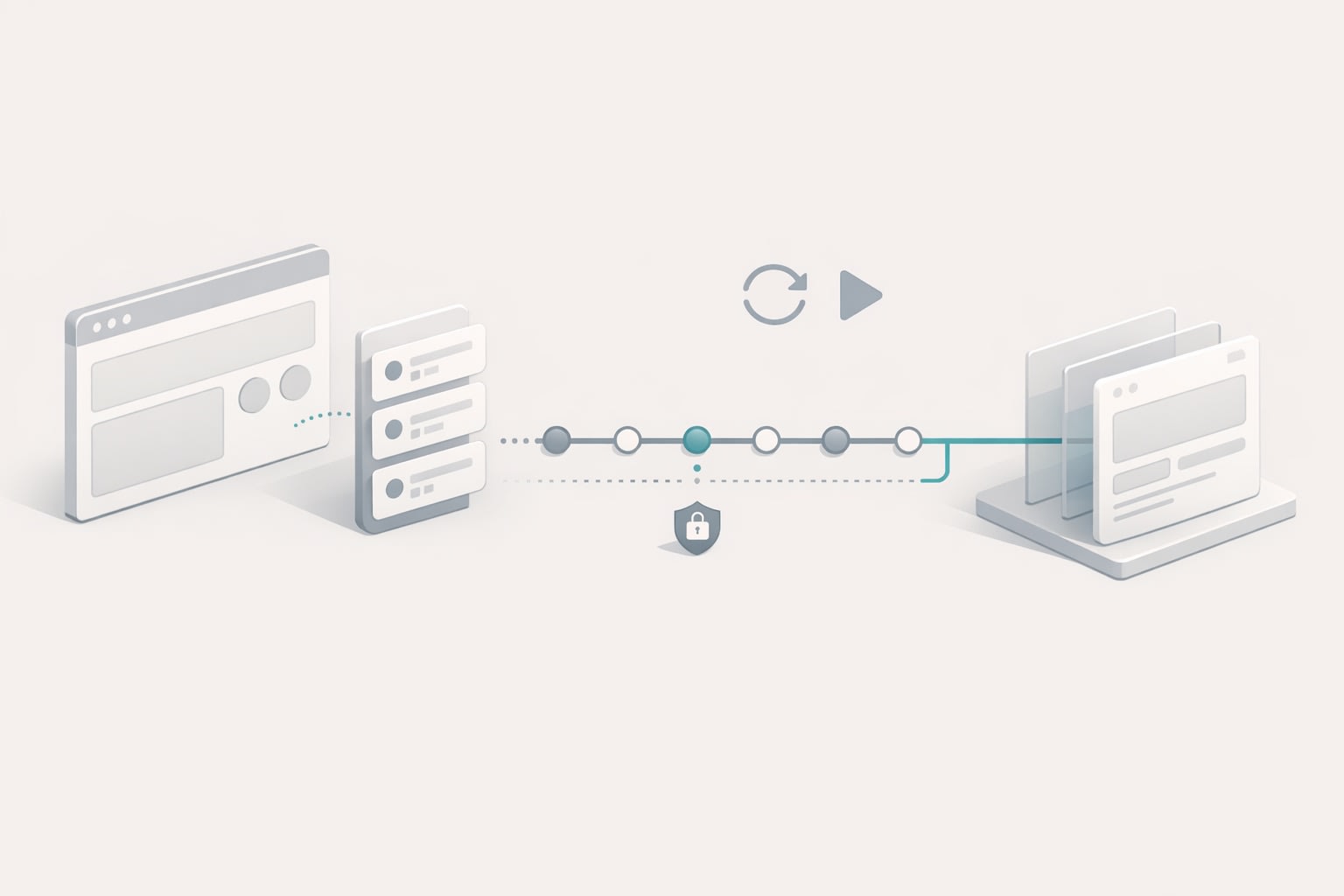
This is where no-code shines: the UI workflow can be “On click → Call API → Create event → Refresh data.” There’s no need for custom frontend logic beyond configuring requests and bindings.
3) Build projection updates with automations
Projections can be updated in two common ways:
- Synchronous: the API endpoint that accepts an event immediately updates the projection in the same transaction.
- Asynchronous: an automation trigger (webhook/queue/db trigger) listens for new events and updates projections shortly after.
Synchronous makes the UI feel immediate; asynchronous is often simpler to scale and less fragile when you have multiple consumers. If you choose async, model the delay explicitly and avoid panic when numbers “lag” for a moment—this is the same mindset you need when dealing with analytics or ad platforms. The article on modeling reporting delays with a data-lag ladder maps well to projection lag: it helps you decide what “fresh enough” means for each screen.
Replayable audit trail that’s actually usable
Audit logs often fail because they’re either too high-level (“updated record”) or too hard to query. An event stream is an audit trail by design, but you still need to make it readable:
- Use explicit event names (RoleGranted is better than UserUpdated).
- Store the actor and where the action came from (UI vs automation vs integration).
- Add correlation IDs so a multi-step workflow can be reviewed as one “story.”
- Expose an “Event timeline” view in the frontend filtered by entity_id.
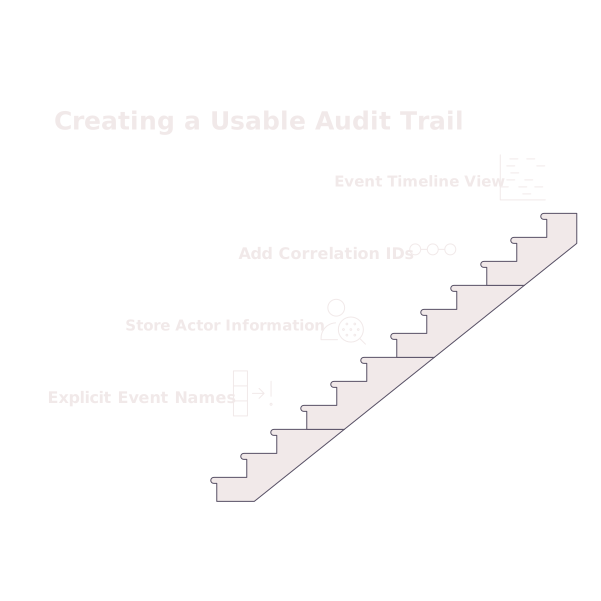
In WeWeb, that timeline is just a list bound to the events endpoint with filters and a clean formatting layer. The benefit is practical: when a stakeholder asks “why did this customer lose access?”, you can answer from facts, not guesses.
Time-travel debugging for no-code apps
Time-travel debugging means you can reconstruct what the app should have shown at a prior moment. You don’t need to snapshot everything; you need deterministic replays.
A simple approach:
- To debug an entity, fetch its events ordered by created_at (or sequence).
- Replay them into a computed state (either server-side via a “replay” endpoint or via a stored procedure / function).
- Compare the computed state to the current projection and highlight divergence.
For no-code teams, the biggest win is not writing a complex client-side debugger; it’s having a reliable, queryable history that makes inconsistencies explainable.
“Rebuild state” buttons that don’t require heroics
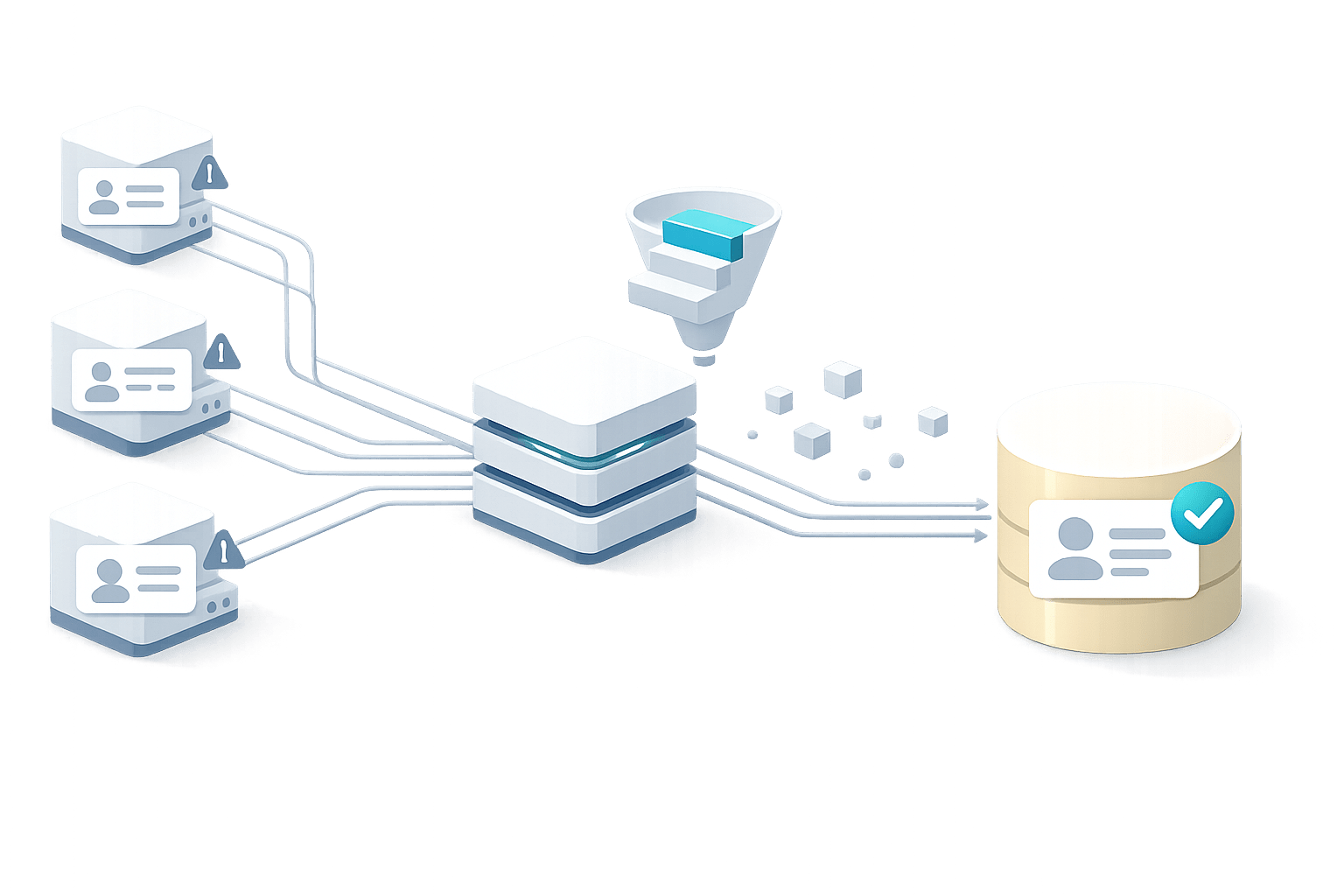
The most pragmatic feature event sourcing unlocks is a safe “Rebuild state” control. When a projection table drifts (bug, partial failure, backfill, integration retries), you can delete and recreate projections from the event log.
A good rebuild workflow looks like this:
- Scope: rebuild one entity, one tenant, or the entire projection.
- Locking: prevent concurrent rebuilds per scope.
- Idempotency: replay should produce the same result every time.
- Visibility: show rebuild status in the UI (queued/running/done/failed).
In a no-code frontend, the “Rebuild” button simply calls an admin endpoint. The heavy work stays server-side (database job, queue worker, or automation). WeWeb’s role-based UI patterns make it straightforward to expose rebuild controls only to admins while keeping the rest of the app purely projection-driven.
Design details that prevent painful edge cases
Stable entity IDs are non-negotiable
If you ever change identifiers, merge records, or import duplicates, your event stream becomes unreliable. Treat entity IDs as persistent, immutable keys. If you’re dealing with attribution, analytics, or AI-generated references, persistent IDs are what keep history coherent across systems. The concept is expanded in why persistent entity IDs fix broken AI citations, and it applies just as strongly to event streams.
Schema evolution and event versions
Events live forever, so payloads will evolve. Add an event_version field and write projection logic that can handle older versions. This is less about perfection and more about avoiding a future moment where a rebuild fails because the oldest events don’t match today’s schema.
Privacy and compliance
Immutable logs can conflict with data minimization. Keep payloads lean, avoid storing sensitive fields when you don’t need them, and prefer referencing secure records over duplicating raw data inside events. If you must store sensitive information, encrypt and implement retention policies that match your obligations.
What you get in practice
- Auditability that answers “who changed what and why” with precision.
- Debuggability through deterministic replays and timeline views.
- Operational resilience via rebuildable projections and clear recovery steps.
- Cleaner no-code frontends that write intents (events) and read computed state (projections).