The feedback cold-start problem and how to launch a high-signal requests portal with 20 customers
Jamie

Why the feedback cold-start happens
A requests portal sounds simple: collect ideas, measure demand, prioritize, ship. The cold-start problem shows up when you only have a handful of customers and almost no visible activity. A quiet board doesn’t just feel empty—it actively changes behavior. Customers hesitate to post because they don’t want to be “the only one asking.” Your team hesitates to point people there because it looks unfinished. And without enough volume, you can’t tell what’s truly important versus what’s just top-of-mind for the loudest account.
The goal early on isn’t “a busy portal.” It’s a high-signal system where every request is tied to a real customer, a specific use case, and a measurable impact. With 20 customers, you can do that better than most companies with 2,000—if you design for signal first and scale second.
Define what “signal” means before you collect anything
Most early portals fail because they start with a blank “Submit an idea” box and hope the crowd will do the structuring. Instead, decide what you need in order to make a roadmap decision. For a B2B product, high-signal feedback usually includes:
- The job to be done (what outcome the customer is trying to achieve)
- Where the request shows up (workflow step, screen, integration, edge case)
- Frequency (daily, weekly, quarterly; how often it blocks work)
- Impact (lost time, lost deals, churn risk, compliance risk)
- Workaround (what they do today, and what it costs them)
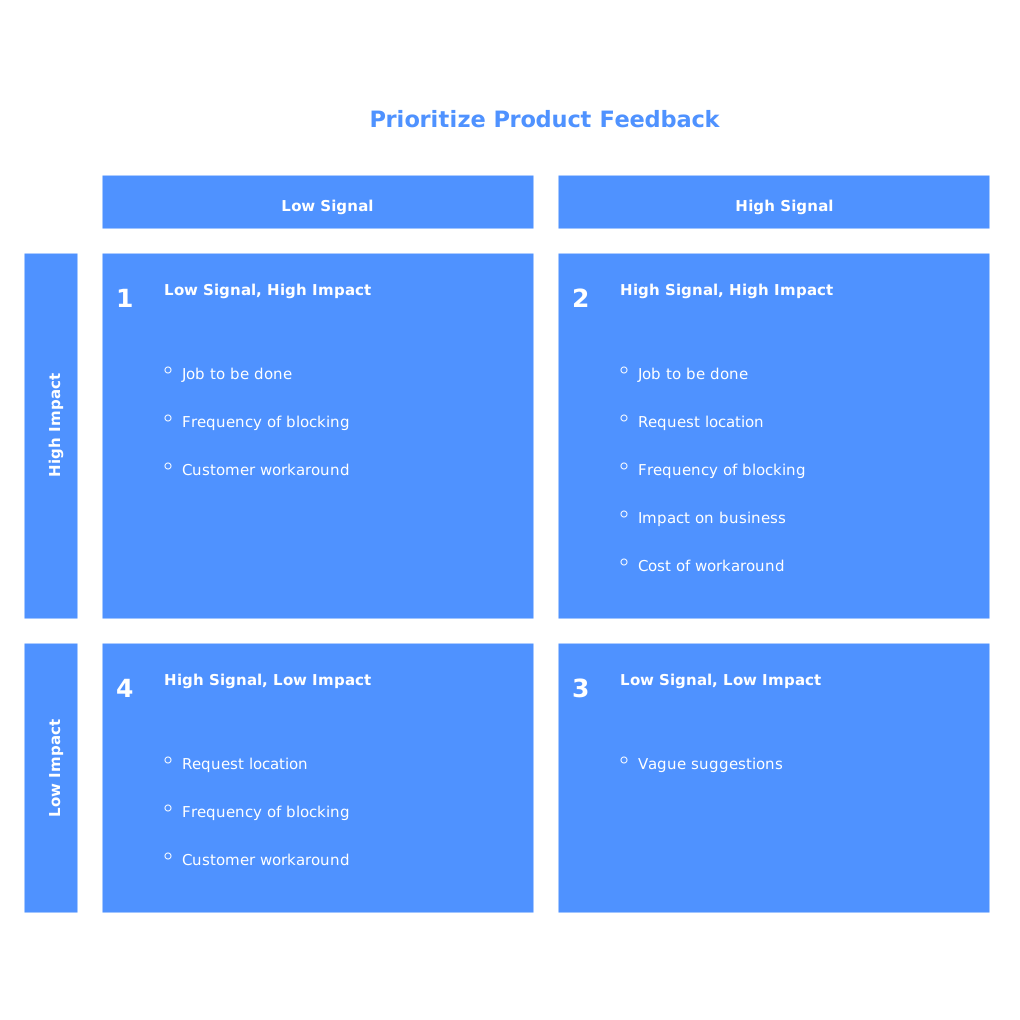
This is the difference between “Add dashboards” and “Let me share a read-only dashboard link with expiring access so our clients can self-serve weekly reporting.” With only 20 customers, the second type of request is what you’re aiming for: precise, attributable, and debuggable.
Seed the board with curated, validated items
A portal shouldn’t start empty. It should start with a small, curated set of requests that reflect what you already know from sales calls, onboarding, support, and founder conversations. The trick is to seed it in a way that doesn’t bias prioritization—but does reduce friction for customers to engage.
Practical approach:
- Pick 10–20 requests that have already come up in real conversations.
- Write each as a problem statement with context and acceptance criteria.
- Add two to three “clarifying questions” in the description to encourage better comments.
- Tag each request with customer segment (SMB vs mid-market, use case, industry) and type (bug, UX, integration, capability).
This does two things: it signals quality (so customers know what “good” looks like), and it gives them something safe to react to. Early engagement is more likely to be an upvote plus a short comment than a fully formed post from scratch.
Make your first 20 customers feel invited, not redirected
When volume is low, “Please post this on the portal” can land as deflection. A better pattern is a two-step handoff:
- Capture the request naturally in the conversation (support ticket, call notes, Slack).
- Publish it on the portal yourself, then invite the customer to confirm details and attach their vote.
The message matters. Instead of pushing them to “go submit,” send a link that says: “I wrote this up to make sure we track it correctly—can you confirm the use case and add anything we missed?” That turns the portal into a shared artifact, not a barrier.
Prevent duplicate requests before they become feedback debt
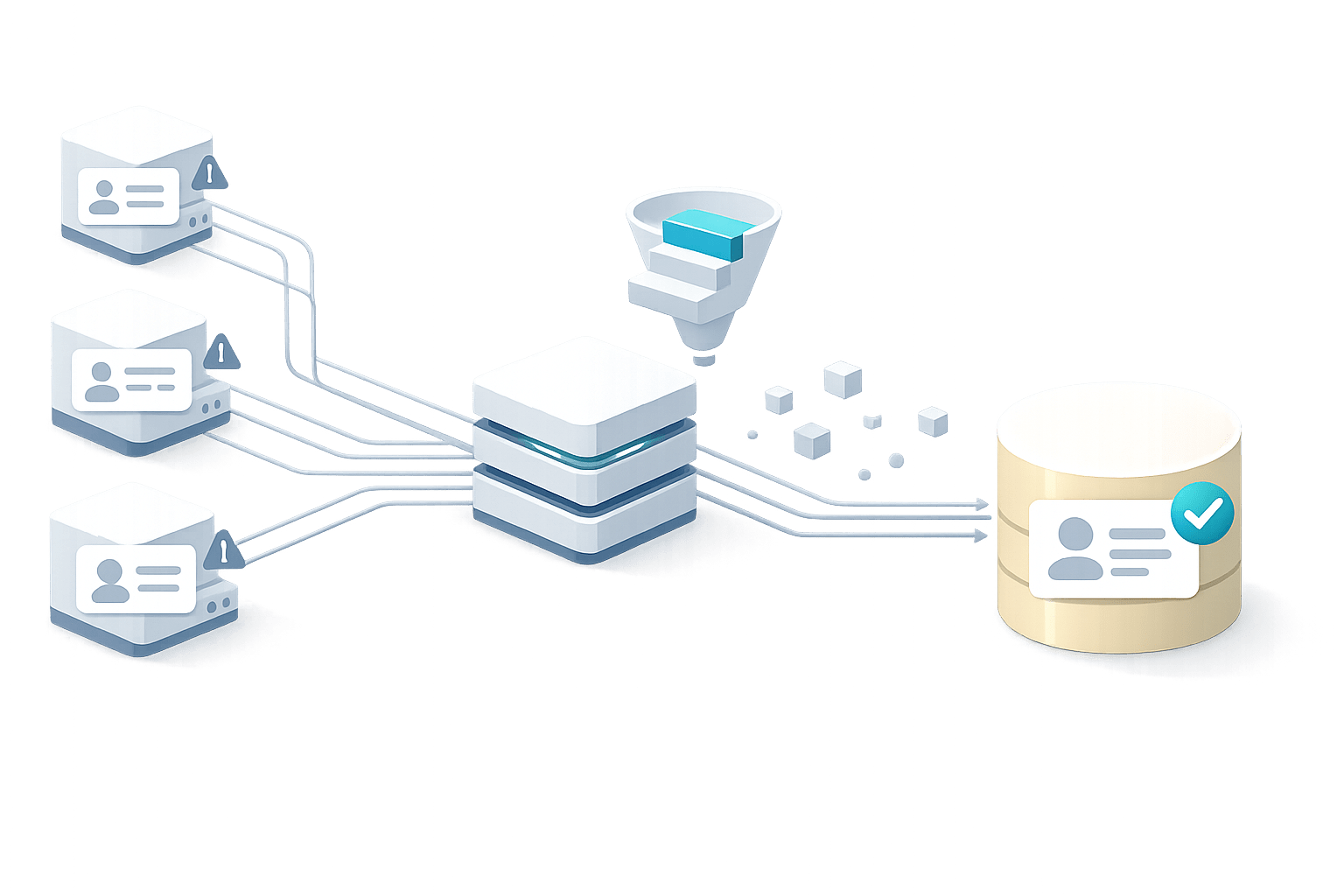
With 20 customers, duplicates feel harmless. But they become costly fast: votes split across multiple posts, engineers chase the wrong “top request,” and customers see the same idea repeated with different wording. This is how feedback debt starts. A lightweight habit early—merging duplicates, standardizing titles, and consolidating context—pays off later.
If your feedback is arriving in multiple places (support, sales, community), it’s worth adopting a repeatable way to spot overlap and unify it. This is the core theme in Feedback Debt and How to Spot Duplicate Requests Across Support Sales and Forums, and it’s especially relevant when your “portal” is still gaining momentum.
Operationally, make one person accountable for request hygiene for the first 60–90 days. Hygiene includes: merging duplicates, rewriting vague titles, and ensuring each item has a crisp definition of done.
Use segmentation to replace volume
When you don’t have many votes, raw counts are misleading. Segmentation is the substitute for volume: it helps you see if a request is critical for a high-value slice of customers, even if only two people asked for it.
At minimum, track:
- Account value (ARR band or plan tier)
- Lifecycle stage (trial, onboarding, active, renewal risk)
- Use case (core workflow category)
- Integration footprint (which tools they rely on)
This keeps you from overreacting to a single “big idea” from a small account, while also ensuring you don’t miss a renewal-critical feature because it only affects a particular segment.
Close the loop early, even if you’re not shipping yet
With a small customer base, feedback is relational. People want to know they were heard. If the only “closure” you offer is a product launch months later, the portal won’t earn trust.
Build closure into your weekly routine:
- Update statuses to reflect reality (Under Review, Planned, In Progress, Complete, Not Right Now).
- Comment with what you learned (“We confirmed this is mostly an onboarding issue, so we’re testing a documentation fix first.”).
- Ask targeted follow-ups on the top 5 items each month to deepen context.
This isn’t about being performative. It’s about making the portal a living system that improves decision quality. If you never change statuses, customers stop checking. If you do, even a small board feels active.
Don’t let bugs dominate your requests portal
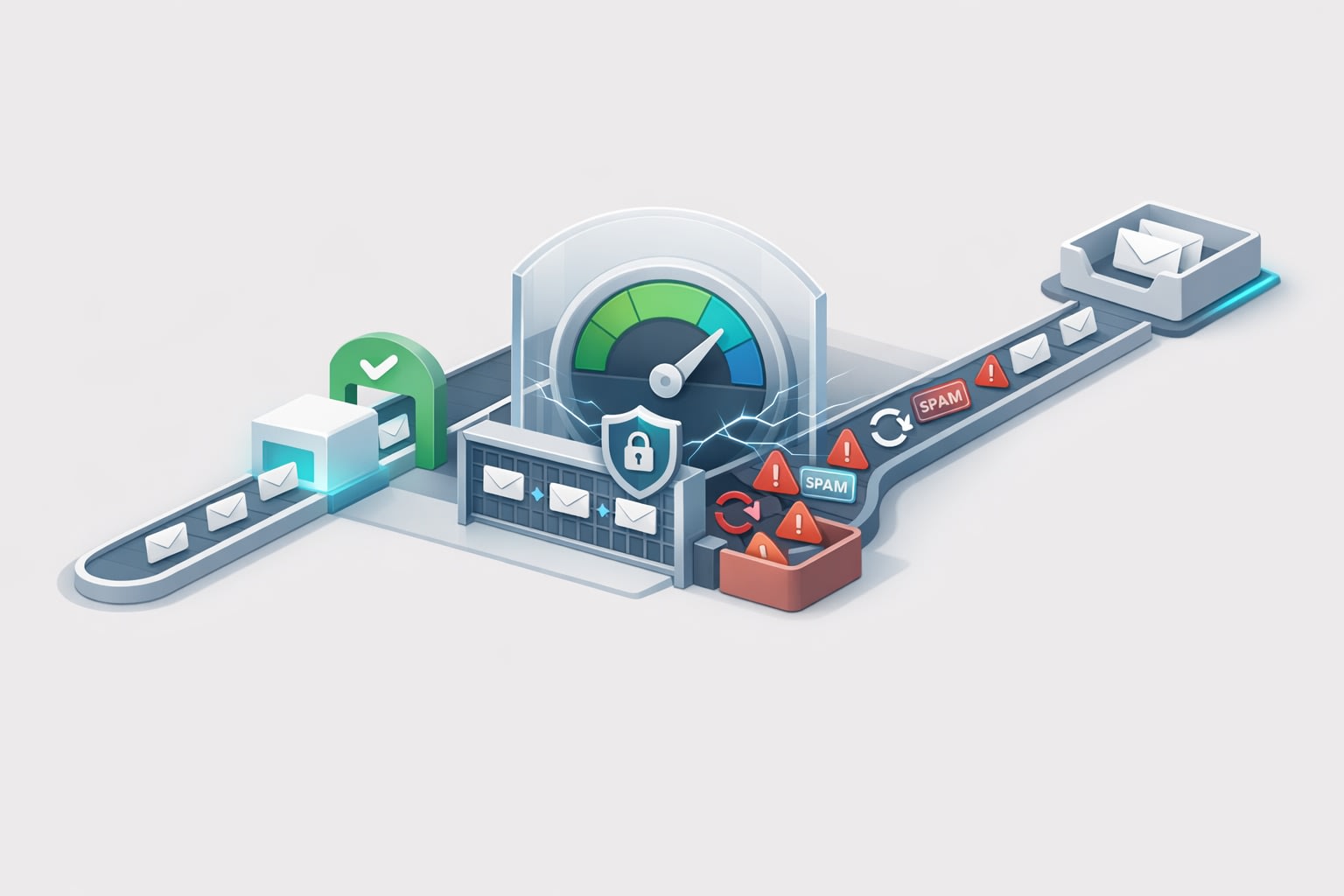
Early-stage products often get flooded with “requests” that are actually defects, regressions, or missing parity fixes. If these live next to strategic feature ideas, your roadmap discussions get distorted. The simplest fix is a clear separation: bugs have a fast lane with operational ownership, while feature requests remain the place for prioritization and discovery.
This is closely related to the “silent queue” dynamic—bugs that accumulate quietly across channels until they derail planning. If you’re seeing that pattern, The Silent Queue Problem and How to Keep Customer Bugs From Derailing Your Roadmap is a useful framework to prevent the portal from becoming a disguised bug tracker.
Pick tooling that matches early-stage reality
You don’t need a complex system to start, but you do need one that makes it easy to capture feedback from wherever it shows up and keep customers informed as decisions evolve. That’s where a dedicated feedback platform can help—especially when you’re trying to centralize requests, deduplicate them, and tie them back to accounts and segments.
For teams that want a quick setup with room to grow, canny.io is designed around that day-to-day workflow: collecting requests via a portal and internal sources, organizing and scoring ideas, and closing the loop with roadmaps and release notes. The key is not the portal itself—it’s the operational rhythm it enables when you only have a small number of customers and every conversation counts.
A simple 30-day bootstrap plan for 20 customers
Week 1: Foundation
- Define your “high-signal” template (problem, impact, frequency, workaround).
- Seed 10–20 validated items from existing conversations.
- Set ownership for request hygiene.
Week 2: Invitation
- Publish items on customers’ behalf after calls; ask them to confirm details and vote.
- Add segmentation fields you’ll actually use in prioritization.
Week 3: Prioritization
- Pick the top 5 items by segment impact, not vote count.
- Run short follow-up interviews to clarify success criteria.
Week 4: Closure
- Update statuses publicly with rationale.
- Share a brief “What we learned” summary to customers.
- Decide which items move into delivery, which need research, and which are not right now.
That process creates momentum without pretending you have scale. With 20 customers, the win is a portal that captures crisp requests, reduces duplicates, and turns feedback into decisions people can see.