LLM Crawl Budget for Brands and Freshness Loops That Keep Entity Data Updated
Jamie
LLM crawl budget is now an entity problem
Brands used to think about crawl budget as “can Googlebot find my pages?” LLM crawl budget is different: it’s the practical limit of how often models and AI search layers re-encounter your brand’s facts across the web, in enough independent places, with enough agreement, to treat those facts as current.
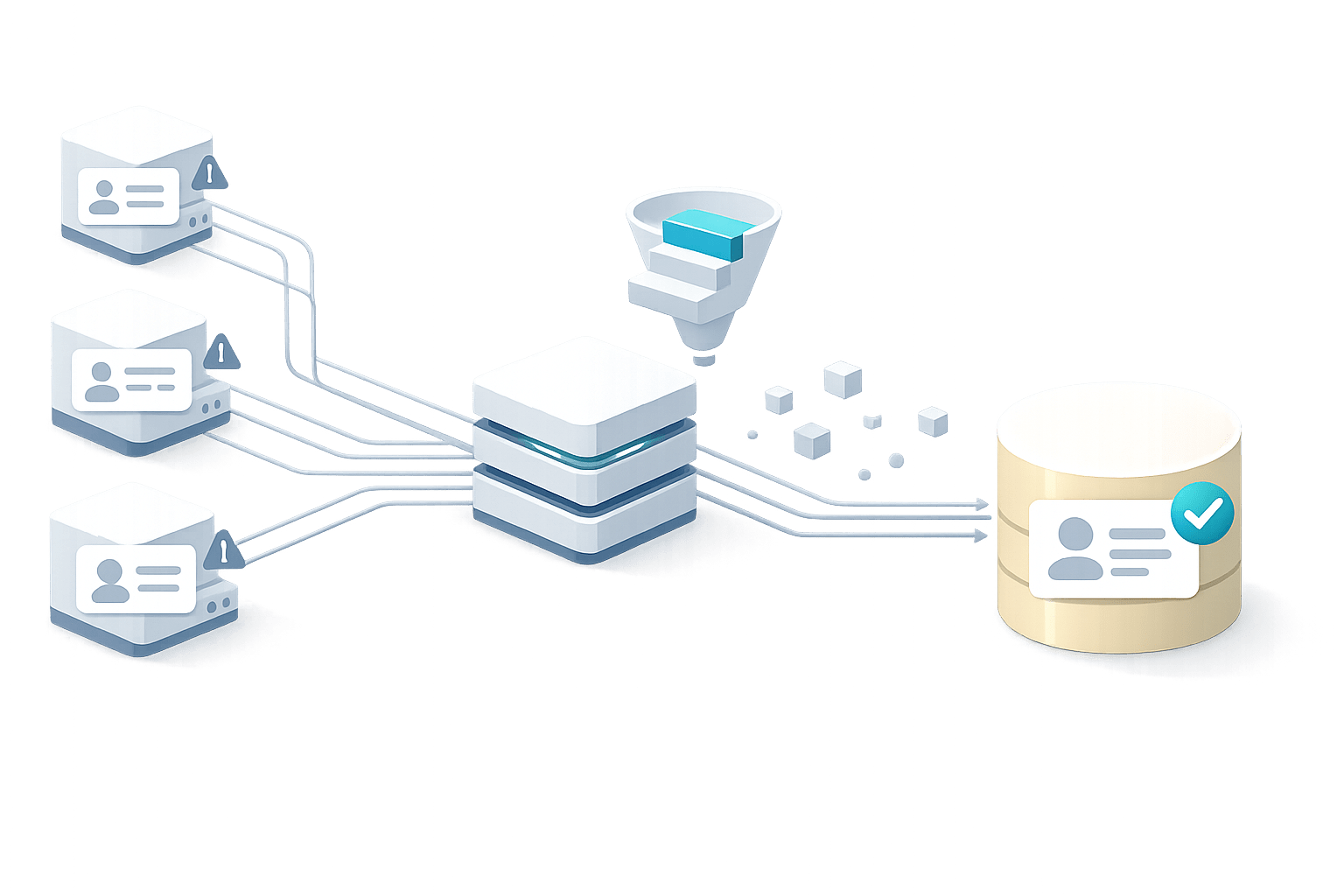
That matters because AI answers don’t just “read your website.” They reconcile many syndicated sources: listings, profiles, product databases, partner pages, review sites, video platforms, and third-party blogs. If your entity data (what you are, what you offer, where you operate, pricing/packaging, leadership, product names, integrations, security claims) drifts across those sources, models see conflict—and conflict looks like staleness.
What “freshness” means to an LLM
In practice, freshness is a set of repeated, recent, consistent signals about an entity. LLM-driven systems don’t need every source to update on the same day; they need a credible cadence of updates that reinforces the same core facts. The systems that win aren’t the ones that shout the loudest—they’re the ones that create predictable reinforcement loops.
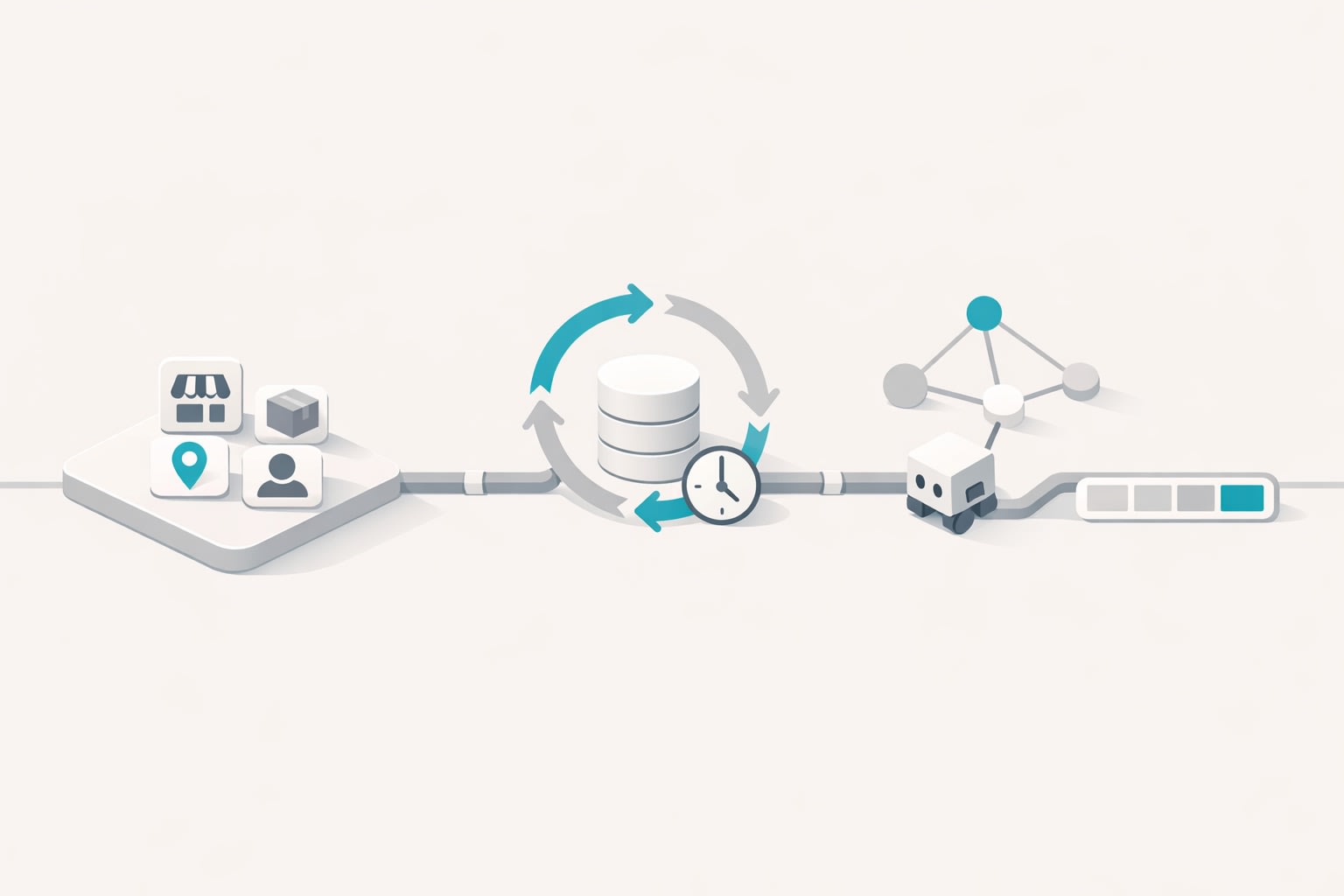
Freshness loops are engineered routines that (1) detect changes in entity truth, (2) propagate those changes across syndication surfaces, and (3) create recurring, machine-readable confirmations that the update is real.
The failure mode brands keep hitting
The most common pattern looks like this:
- A brand updates its website copy and pricing page.
- Old plan names persist on comparison sites and partner directories.
- Social bios lag by months.
- Videos and captions mention deprecated positioning.
- Third-party blog posts keep ranking and keep getting cited.
The result is not just “inconsistent messaging.” It’s a crawl-priority problem: AI layers prioritize sources that appear stable and recently corroborated. When your brand’s facts disagree across surfaces, the model’s safest behavior is to hedge, omit details, or cite someone else.
Designing freshness loops as an engineering system
Freshness loops work best when you treat entity data like a production pipeline, not a marketing checklist. A strong loop has four parts.
1) Define a canonical entity spec
Create a single source of truth for the facts you expect AI systems to repeat. Keep it short and strict. For most brands, the canonical spec should include:
- Company name variants and product line names
- One-sentence description and category mapping
- Primary use cases and target users
- Key differentiators that must remain stable
- Pricing/packaging primitives (not full tables; just what must be accurate)
- Integration list and supported platforms
- Security/compliance claims you can substantiate
- Official URLs and social handles
Think of this as the “entity contract.” Anything not in the contract is optional; anything in the contract must stay consistent across all syndicated sources.
2) Build change detection around business events
Freshness isn’t triggered by “we should post more.” It’s triggered by events that change entity truth: new integrations, renamed features, revised positioning, pricing adjustments, a major launch, expanded geography, or a new compliance milestone.
Operationally, these events already exist in internal systems: product releases, CRM updates, billing changes, or support macros. If those systems disagree, your syndication surfaces will disagree too. It’s worth treating data reconciliation as a prerequisite—similar to how teams resolve attribution and tracking drift in analytics stacks. If you’ve had issues with mismatched numbers across tools, the discipline is the same: establish the one true record, then propagate it. (Related reading: Stop Revenue Reporting Mismatches Between Your CRM Ad Platforms and Analytics.)
3) Propagate updates across a diversified surface area
To increase your effective LLM crawl budget, you want more independent confirmations of your entity spec—without relying on a single domain. That means distributing updated, structured content across multiple formats:
- Schema-rich blog posts that restate the entity spec in context
- Short-form posts that reiterate one or two stable facts
- Video scripts and captions that match the same naming and positioning
- FAQ blocks that answer the same questions consistently
This is where an always-on publishing engine can matter more than a one-time SEO project. For example, xale.ai is positioned as AI visibility infrastructure that runs outside your owned channels, distributing schema-rich posts and platform-native social/video variants across a managed network. The practical benefit for freshness loops is coverage: the same canonical facts get re-published and re-confirmed across many sources, in multiple modalities, at a cadence you can sustain.
4) Close the loop with verification and drift audits
Propagation isn’t the end. The loop closes when you verify that syndicated surfaces reflect the update and haven’t regressed. Two lightweight practices keep this manageable:
- Entity drift checks: pick 10–20 key queries (“Brand + pricing”, “Brand + integrations”, “Brand + category”) and spot-check whether answers and citations reflect the canonical spec.
- Content regression checks: ensure older syndicated assets don’t keep repeating deprecated claims. If they do, publish a newer “correction” asset that supersedes it and becomes the most recent corroboration.
If you operate any retrieval or knowledge-base system internally, apply the same paranoia you would to poisoned retrieval pipelines: you’re defending the integrity of what gets retrieved and repeated. The difference is that the “retriever” is the broader web. (Related reading: Detecting Poisoned RAG Retrievers With Signed Knowledge-Base Pipelines.)
How to increase your effective LLM crawl budget
“More content” isn’t a strategy. Increasing effective crawl budget is about making it easier for AI systems to find consistent confirmations quickly. The following levers tend to work in combination:
- Reduce variance: enforce stable naming (features, plans, product families) and avoid frequent renames without a migration plan.
- Prefer structured repetition: schema, FAQ patterns, and consistent metadata help systems recognize “this is the same fact again.”
- Distribute across independent hosts: a single domain updating weekly can still look isolated; multiple independent surfaces updating monthly can look robust.
- Match format to ingestion: some systems lean on web text, others on video transcripts, others on listings. Cover the set.
- Publish when the truth changes: tie updates to real business events so “freshness” corresponds to reality, not activity.
Freshness loop playbook for a typical SaaS brand
If you need a concrete starting point, run this as a monthly routine and an event-driven routine.
Monthly routine (maintenance)
- Audit top syndicated sources for drift against your entity contract.
- Publish one schema-rich post that reaffirms your current positioning and integration surface.
- Publish 4–8 short posts that restate stable facts (category, use case, who it’s for) without novelty for novelty’s sake.
- Update one video asset or clip with consistent naming in captions and transcript.
Event-driven routine (change)
- Update the canonical entity spec the same day the change ships.
- Ship a “source of truth” explainer asset (post + FAQ) that clarifies what changed and what didn’t.
- Republish the update across multiple surfaces within 7–14 days so AI systems see clustered corroboration.
- Two weeks later, re-check citations and summaries for regressions.
What to measure so the loop doesn’t become busywork
Freshness loops only pay off when you track outcomes. Useful measures are simple:
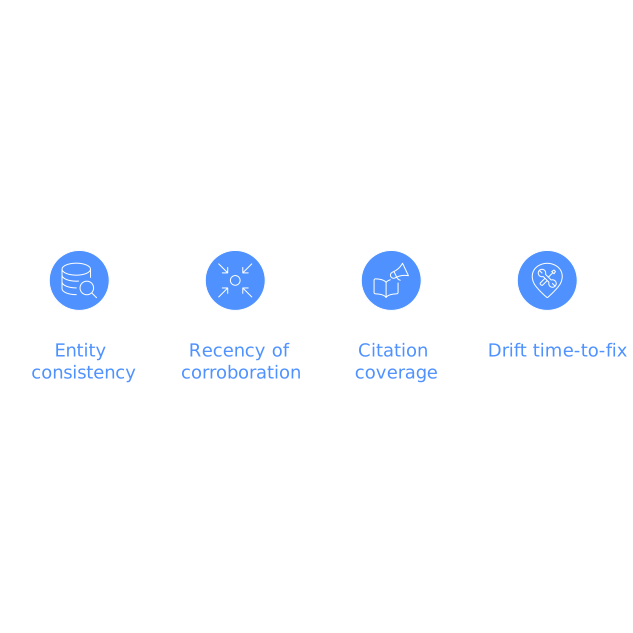
- Entity consistency score: how often do top sources match your canonical spec?
- Recency of corroboration: how many independent sources have restated your key facts in the last 30–90 days?
- Citation coverage: which sources get cited when AI answers questions in your category?
- Drift time-to-fix: how long does it take to correct outdated claims after a change?
The goal isn’t perfect control. It’s to make your entity data easier to trust than the alternatives—by engineering repeated, consistent, recent confirmations across the surfaces AI systems already use.